

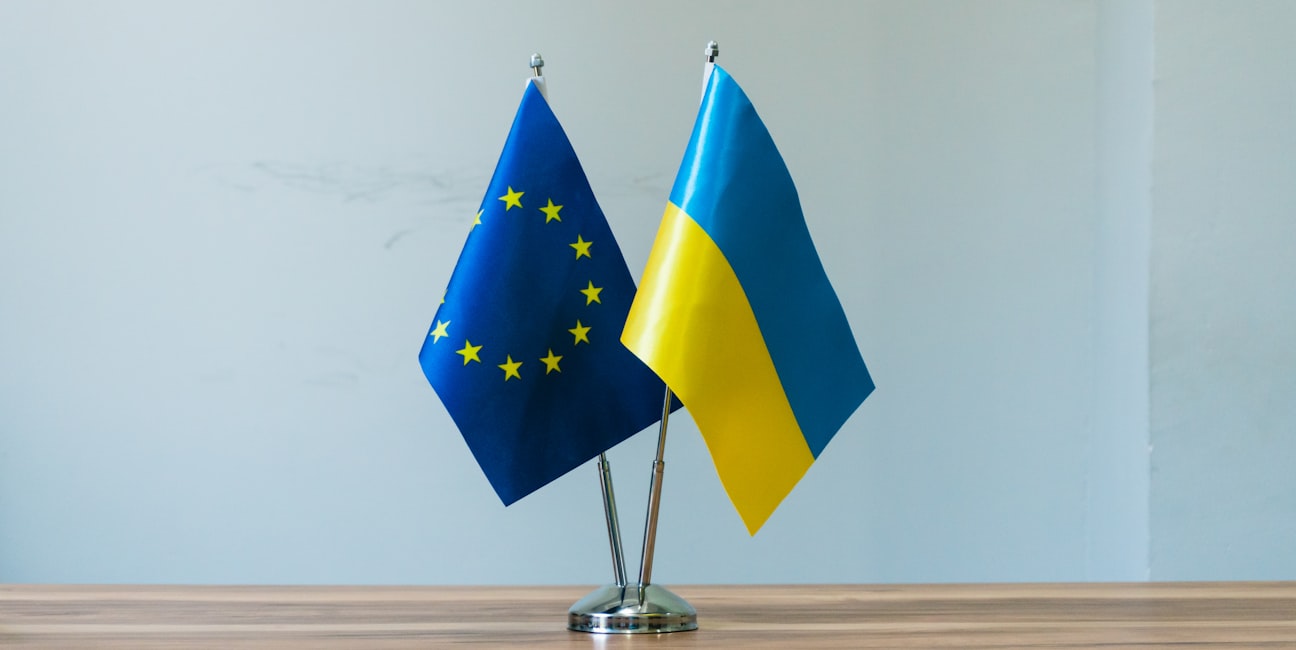
German Chancellor Friedrich Merz has formalised what was previously a trial balloon. In a four-page letter circulated to EU leaders this week, he proposed that Ukraine be granted "associate membership" of the European Union — a status that would integrate Kyiv into EU decision-making without a vote, access to the EU budget, or a legally binding accession timeline.
Under Merz's plan, Ukrainian representatives would participate in the European Council, the Council of the EU, the European Commission, and the European Parliament, but without voting rights. Ukraine would begin gradual integration into the EU's body of law while remaining outside the budget. The mutual defence clause — Article 42.7 of the EU treaty, which requires member states to assist each other in the event of armed attack — would be extended to Ukraine through a "political commitment by member states." A snapback mechanism would allow the arrangement to be suspended if Kyiv backslides on the rule of law.
All of this would be formalised not through an accession treaty — which would require ratification by all 27 member states — but through a simple "political agreement." Merz says it would be "a decisive step in Ukraine's path towards full membership."
Zelensky has rejected every version of this idea, consistently and in public. At the informal EU summit in Cyprus in April, he told assembled EU leaders: "Please do not look for symbolic EU membership for Ukraine. I do not support it. The people do not support it." His position is that Ukraine has earned its place — not through politics, but on the battlefield. "We have had enough of symbolic alliances," he said, invoking the Budapest Memorandum, the 1994 agreement in which Ukraine surrendered its nuclear arsenal in exchange for security guarantees that provided no protection when Russia invaded in 2022.
Zelensky's concern is not that associate membership is inadequate in isolation — it is that associate membership, in practice, is how you end up where Turkey is: nominally a candidate since 1963, still waiting.
Merz's own letter is revealing. He acknowledges that full accession "in the short term" is not achievable, citing "countless obstacles and the political complexities of the ratification processes in the various member states." With Viktor Orbán's defeat in Hungary's elections, the most visible blocker is gone. But behind the scenes, several governments retain serious reservations — about Ukraine's levels of corruption, its agricultural sector (which would reshape EU subsidy flows), the war's ongoing reconstruction costs, and the sheer institutional weight of absorbing a country of Ukraine's size.
As Morning Post Europe's David Carretta wrote: "Far from relaunching Ukraine's hopes of rapid accession, Merz's letter reveals the EU's difficulties in keeping its enlargement promises." The European Commission acknowledged the proposal without endorsing it, saying EU institutions are "closely studying" what Merz has put forward.
The associate membership debate tells us more about the EU than it does about Ukraine. Brussels has shown, repeatedly, that the gap between its political rhetoric on enlargement and its practical capacity to deliver is wide. Zelensky's scepticism is not diplomatic posturing — it is a rational reading of history. Any associate membership arrangement that is to be taken seriously in Kyiv will need to be materially different from what Merz has put forward: legally binding, time-limited in its interim status, and backed by security guarantees with real teeth. Without those elements, it is, as Zelensky has said, a new waiting room with no checkout time.


