A growing coalition of EU officials is pushing for a permanent EU Security Council of 10–12 members that could make foreign and defence decisions without requiring unanimity — a proposal with serious constitutional implications for smaller member states.
German Chancellor Friedrich Merz used the Charlemagne Prize ceremony in Aachen to lay out Germany's opening position on the 2028-2034 EU budget: fewer farm subsidies, more defence investment, and a hard no on joint borrowing.
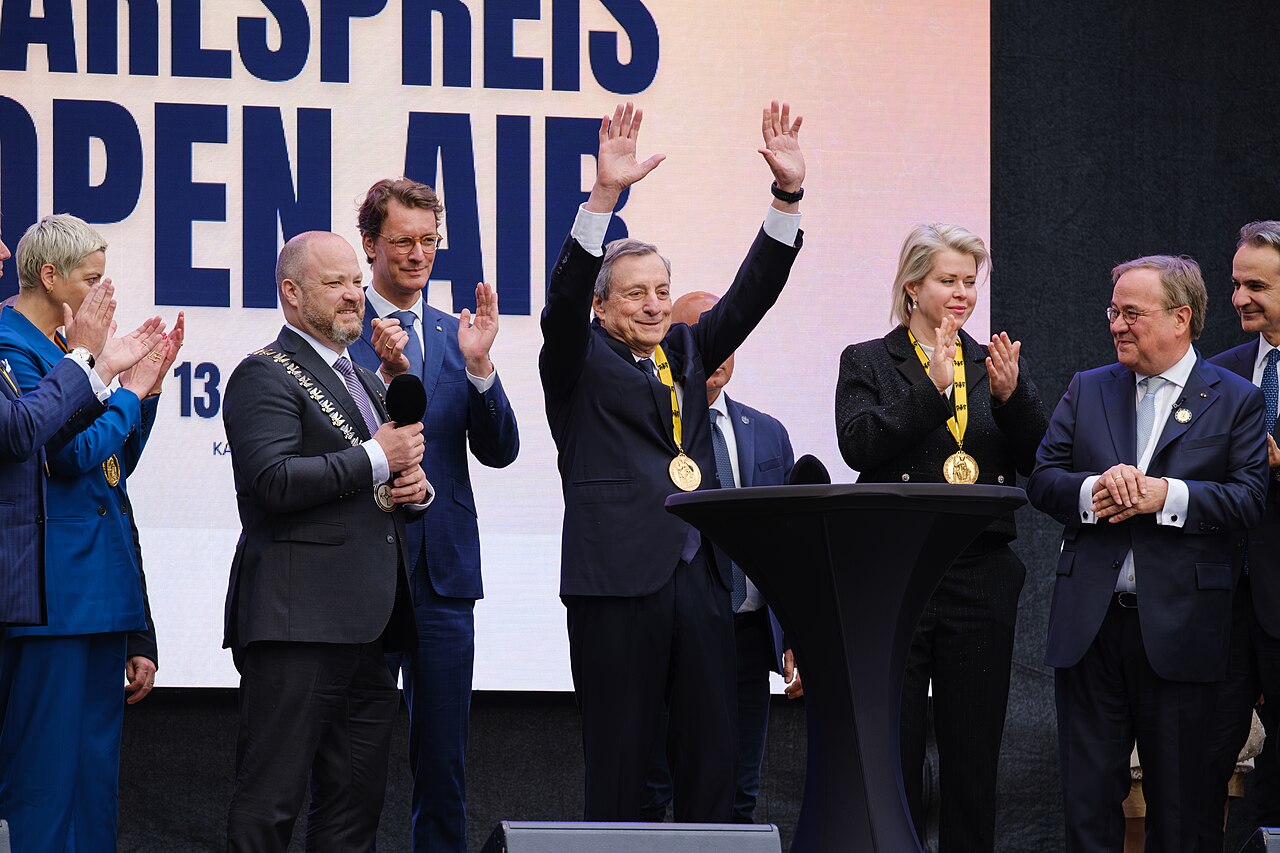
Accepting the Charlemagne Prize, Mario Draghi gave Europe’s political class its starkest diagnosis yet — and the gap between his prescription and what Berlin is willing to do has never been wider.
Until now, there was no systematic way to measure whether the EU delivers on its commitments.



.png)