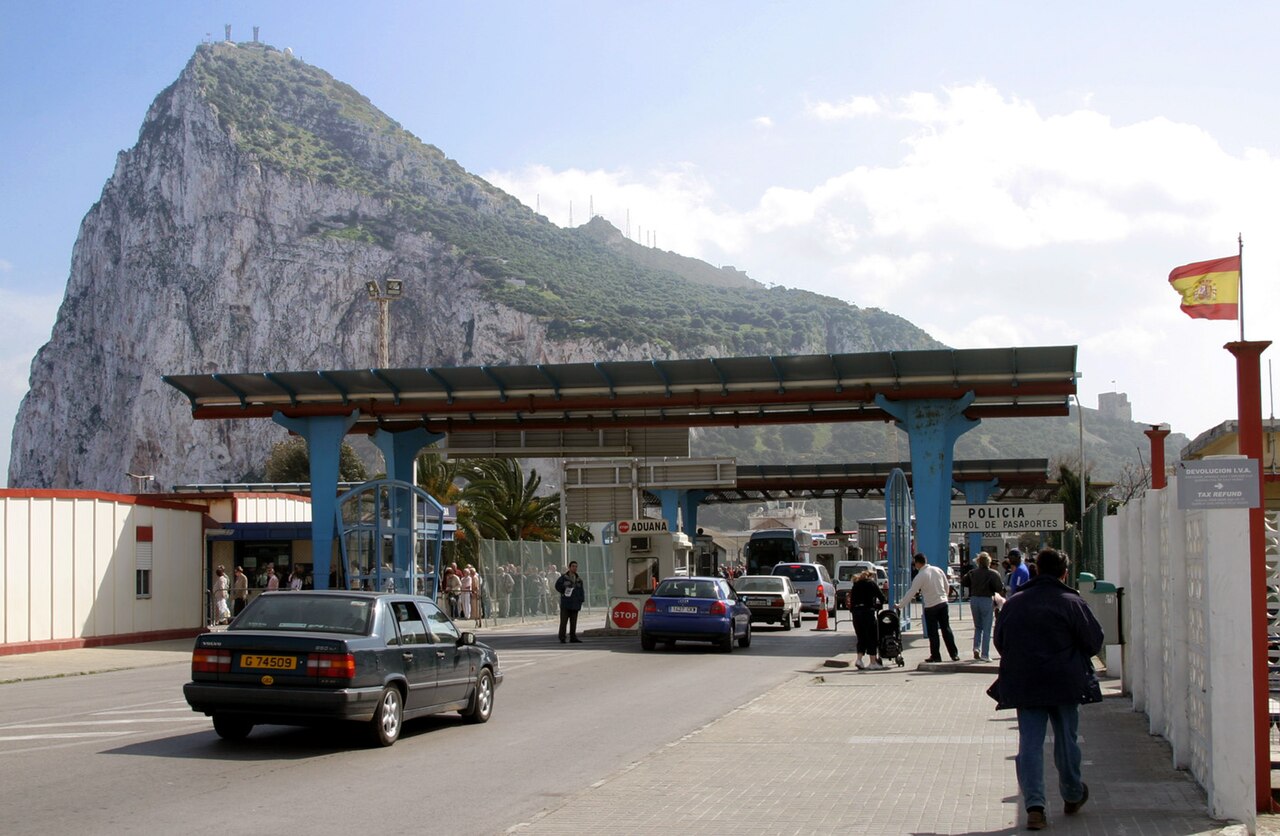
For the roughly 15,000 people who cross between Spain and Gibraltar to work each day, the change is hard to overstate. A month ago they queued at an international border. Now they walk or drive straight through. The last land-border fence in continental Europe is gone — and the first month has been smooth enough to make it look easy. It wasn't, and it isn't.
The fence — "la verja" — had stood on the isthmus between Gibraltar and the Spanish town of La Línea de la Concepción for well over a century. It came down at midnight on 15 July 2026, the moment a UK–EU treaty on Gibraltar entered provisional application. The European Commission and the United Kingdom signed the deal in Brussels on 14 July, closing more than four years of negotiations and the last major loose end left by Brexit. Gibraltar had been left out of the 2020 Trade and Cooperation Agreement, leaving its border in limbo ever since.
The treaty folds Gibraltar into the Schengen free-travel area for people, without changing its status as a British Overseas Territory. Gibraltar keeps its own government, its own laws and control over who lives there. What disappears is the daily friction of a hard border running through a single working community.
Free movement across the land border does not mean no border at all. Schengen's external checks simply moved to Gibraltar's airport and port, where anyone arriving from outside the zone is screened. The arrangement is unusual: British and Spanish officers work side by side, in a dual-control setup often compared to the juxtaposed passport booths at Eurostar terminals in London and Paris. Crucially, Spain — not the EU border agency Frontex — carries out the full Schengen checks at Gibraltar's airport, a compromise that let both sides claim their red lines were respected.
The wrinkle came almost on cue. On 6 August, Gibraltar's Chief Minister Fabian Picardo said a software problem was stopping the airport's electronic gates from processing Gibraltar residents and EU citizens. The fault forces returning residents to deal with both Gibraltar and Spanish border officials by hand, rather than gliding through the automated system the treaty promised. It is a technical hiccup, not a diplomatic one — but it is exactly the kind of friction that will test how well a border built on two national authorities sharing one checkpoint actually holds up.
Gibraltar is now a live experiment in a border that two governments run together. For the commuters of La Línea it is already a quiet revolution. For everyone watching Europe's frontiers — from the Channel to the Balkans — it is a template worth studying: proof that even the most contested border can be reengineered when both sides want it enough. The e-gate glitch is a reminder that the politics were the hard part, but the plumbing still has to work. One month in, the fence is gone and the queues are shorter. The real test is whether the shared checkpoint still feels seamless a year from now.