

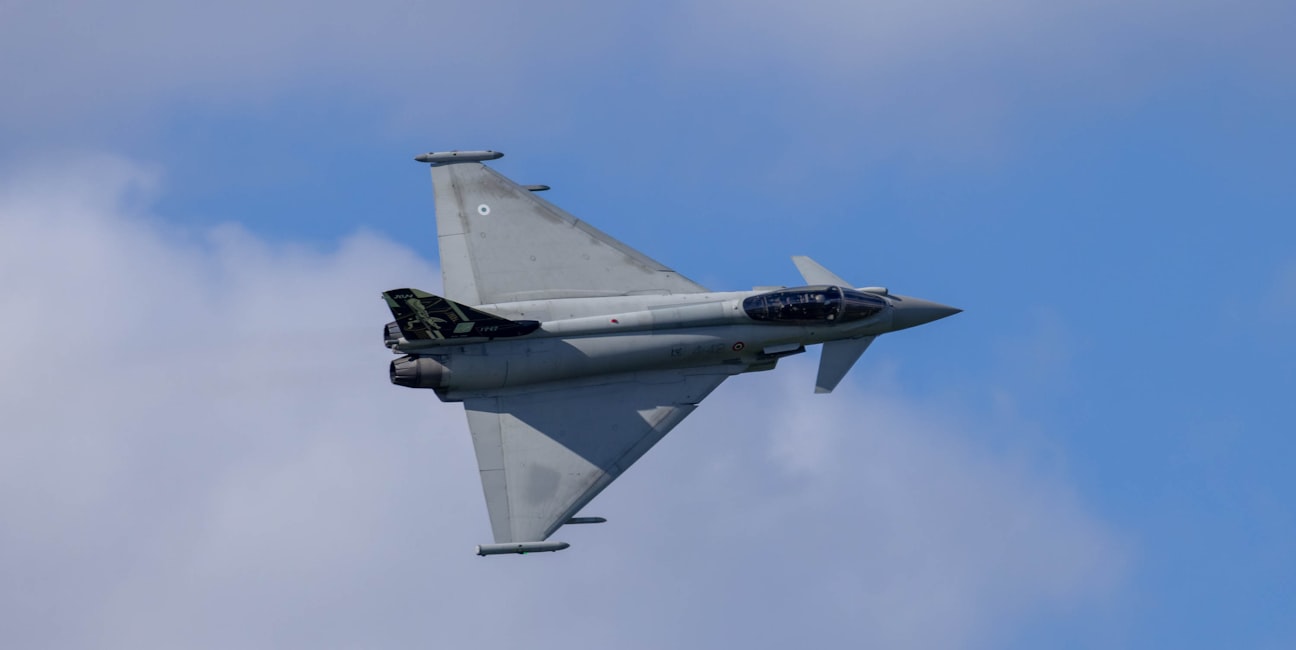
US officials briefed NATO counterparts at alliance headquarters last week on plans to significantly draw down American military contributions to Europe — a classified presentation that left senior officials in Brussels shaken and scrambling for contingency plans.
The briefing outlined cuts across several key capability areas simultaneously. Strategic bomber availability for NATO missions will be halved. All US submarine coverage under NATO command will be withdrawn entirely. Fighter jet contributions to the alliance will be reduced by roughly a third. Armed drone provision — which European militaries have come to rely on for intelligence, surveillance, and reconnaissance — is also being scaled back.
The scope of the drawdown appears to have caught European allies off guard. Officials present at the briefing described it as a substantial revision to commitments that had been largely stable since the Cold War. The disclosure came without prior diplomatic signalling, amplifying the sense of rupture.
Washington made clear it expects European allies to address the capability gaps before NATO leaders gather in Türkiye in July 2026. The timeline is tight, and several of the withdrawn capabilities — particularly submarine coverage and strategic bomber assets — cannot be replicated quickly.
Submarines are the hardest to replace. No European NATO member operates nuclear-armed submarines under alliance command at a scale equivalent to the US contribution. The gap in undersea deterrence is effectively unbridgeable on the current schedule.
On fighter jets, European air forces face a mix of aging fleets and incomplete F-35 deliveries. Countries like Germany, Denmark, and the Netherlands have orders in progress, but most aircraft won't arrive before July. On reconnaissance drones, the situation is more tractable — several European firms are in advanced development phases and procurement frameworks exist — but sourcing at scale takes years, not weeks.
The briefing is the most concrete signal yet that the Trump administration's transatlantic retrenchment is not rhetorical posturing. It represents an operational decision to redeploy assets — almost certainly toward the Pacific — regardless of the effect on the European deterrence architecture built over seven decades.
The July Türkiye summit was already shaping up as a test for the alliance. European members had been preparing to announce higher defence spending commitments, hoping to demonstrate solidarity and stave off further US disengagement. Now they face a harder problem: spending pledges matter, but capability gaps of this magnitude take years to close. A commitment to reach 2.5% of GDP on defence looks considerably weaker if the assets that underpinned collective deterrence since the Cold War are gone within months.
NATO's credibility depends on the credibility of its commitments. What European governments decide between now and July will go a long way toward determining whether that credibility holds.


