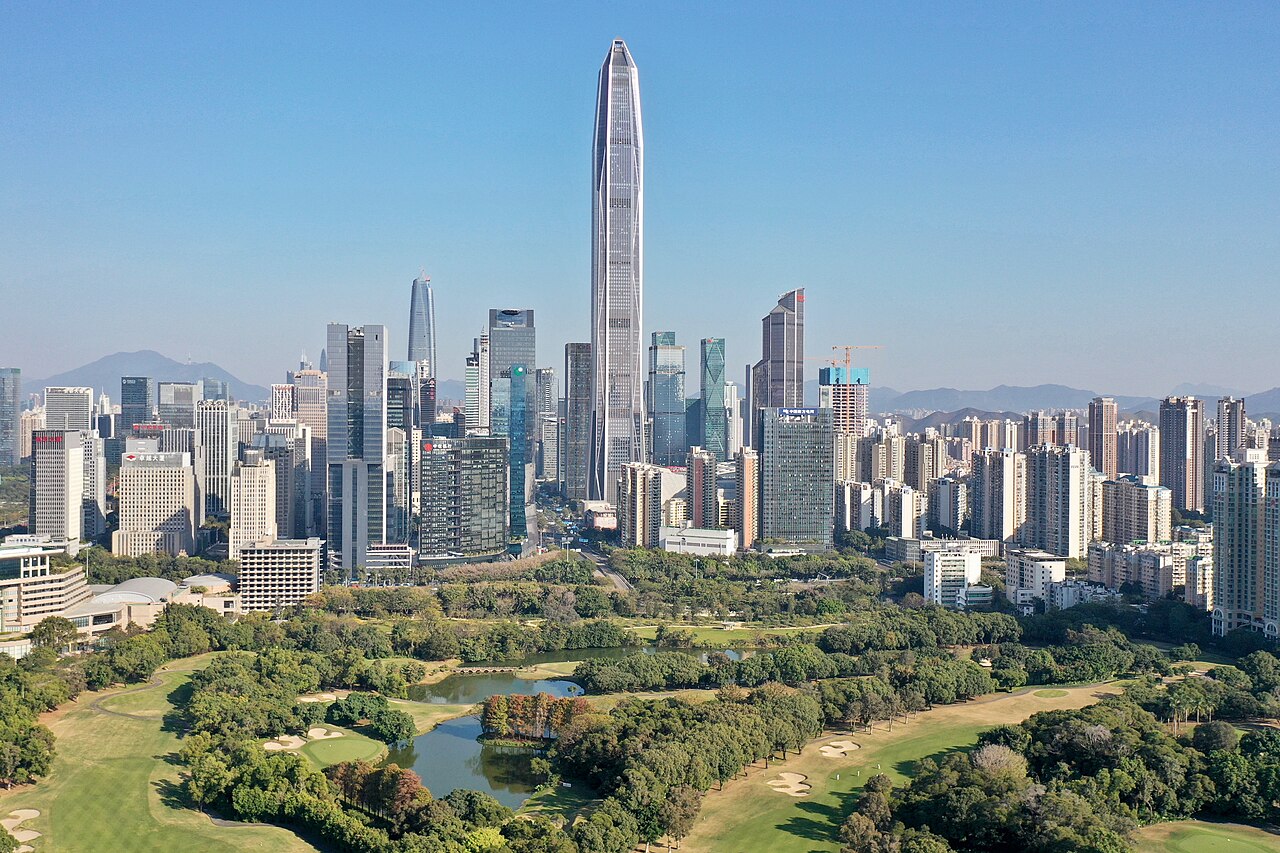
Europe spent last week arguing about who should sit at the table. This week the most important table is in southern China, and it has three chairs.
The White House confirmed on Friday, and the Kremlin on Saturday, that Donald Trump, Xi Jinping and Vladimir Putin will meet on Thursday in Shenzhen, on the margins of the Asia-Pacific Economic Cooperation summit that China is hosting on 18 and 19 November. There will be no separate Trump-Putin bilateral. US officials describe the session as the start of a conversation rather than a negotiation. "We do not expect to get to any kind of agreement," a senior administration official said.
Washington's version is narrow. Trump wants to open talks on a three-way nuclear arms deal, after New START, the last US-Russia arms treaty, expired in February and he refused Moscow's offer of a one-year extension. He also wants to discuss the Iran war. According to US officials, Ukraine is off the table.
Moscow's version is wider. The Kremlin says Trump and Putin will keep working through the full range of Ukraine settlement issues in Shenzhen. Its spokesman, Dmitry Peskov, waved away comparisons with the 1945 Yalta conference, arguing that nothing agreed in Shenzhen could be imposed on anyone else. But Russia's own chief negotiator set the tone this past week. At the US-brokered talks in Abu Dhabi, Vladimir Medinsky called for "a new Yalta and Potsdam", the conferences that split post-war Europe into spheres of influence.
China's foreign ministry had not publicly confirmed the date by Saturday afternoon. Beijing has shown little appetite for making Ukraine the subject. German President Frank-Walter Steinmeier, who met Xi in October, reported that Xi described the conflict as a European war in which Europeans must also sit at the negotiating table. Beijing has been equally cool on nuclear talks: its arsenal of an estimated 600-plus warheads is a fraction of the US and Russian stockpiles.
When EU Insider last checked in, on Saturday, leaders meeting in Dublin had just agreed to send a team to the next round of Ukraine talks: national officials from Britain, France, Germany, Italy and Poland, alongside the European Commission and the European Council. Steve Witkoff, Trump's envoy, said Putin had agreed that Europeans could take part. The Kremlin never confirmed that. No date has been set for the next round, and the Baltic and Nordic states, the countries most exposed to Russia, are not on the team.
The same leaders spent much of Dublin warning against Moscow's push to reopen Europe's "security architecture" before a ceasefire. That debate has not gone away. Jared Kushner, Trump's other envoy, set out five US goals for a long-term European security framework: "permanent security consultations, reliable crisis communications, greater military transparency, reciprocal measures to reduce escalation risks, and an enduring framework for long-term European security and stability". He added that "Nato will remain central to European collective defence". US officials have floated reviving the NATO-Russia Council, the consultative body Moscow walked away from as it prepared for its full-scale invasion.
Moscow is asking for far more. Russia's foreign ministry suggested this past week that individual NATO members could sign bilateral non-aggression pacts with Russia. That would hollow out the alliance's mutual-defence guarantee from the inside.
Even if Washington keeps its word and Ukraine stays off the formal agenda, Europeans have three reasons to watch Thursday closely.
The first is format. Kyiv and its European backers did not choose this meeting and will learn what was said only afterwards. Ukraine's foreign minister, Andrii Sybiha, warned in October that a US-China-Russia meeting would do "only the opposite" of bringing peace, by encouraging Putin to keep fighting. Edgard Kagan, a former US diplomat now at the Center for Strategic and International Studies, said Ukrainians and Europeans would dislike the signal of three leaders appearing to make decisions over their heads.
The second is linkage. Arms control and the Iran war are exactly the kind of issues where Putin can offer Trump something he wants. Every concession Moscow makes on a file Washington cares about raises the price Russia can ask elsewhere, including in Ukraine and on European security.
The third is timing. Trump's party has just lost both chambers of Congress in the midterms, and Brookings' Robert Kagan has warned that Moscow and Beijing may turn more aggressive if they conclude Trump is "on his way out". A president looking for a foreign-policy win before a hostile Congress arrives in January is a president Europe needs to keep close.
Europe won a seat at the next Ukraine round on paper. Shenzhen is a reminder that seats can be bypassed. The test for the new five-capital team is not only what it says in the next round, but how fast it can find out what was said on Thursday and whether it can lock in Washington's line that nothing about Europe's security is settled without Europeans. Watch three things this week: whether Beijing confirms the meeting and its agenda, whether the US and Russian readouts on Ukraine match, and whether EU leaders get a briefing before the Kremlin gives its own version. If the readouts diverge, Moscow will be selling Europe's capitals a story about a deal they never saw.