

The morning after the midterms, Europe's capitals had a rare luxury: a wounded Donald Trump. They also had a sobering reminder of how little a US election changes in Brussels.
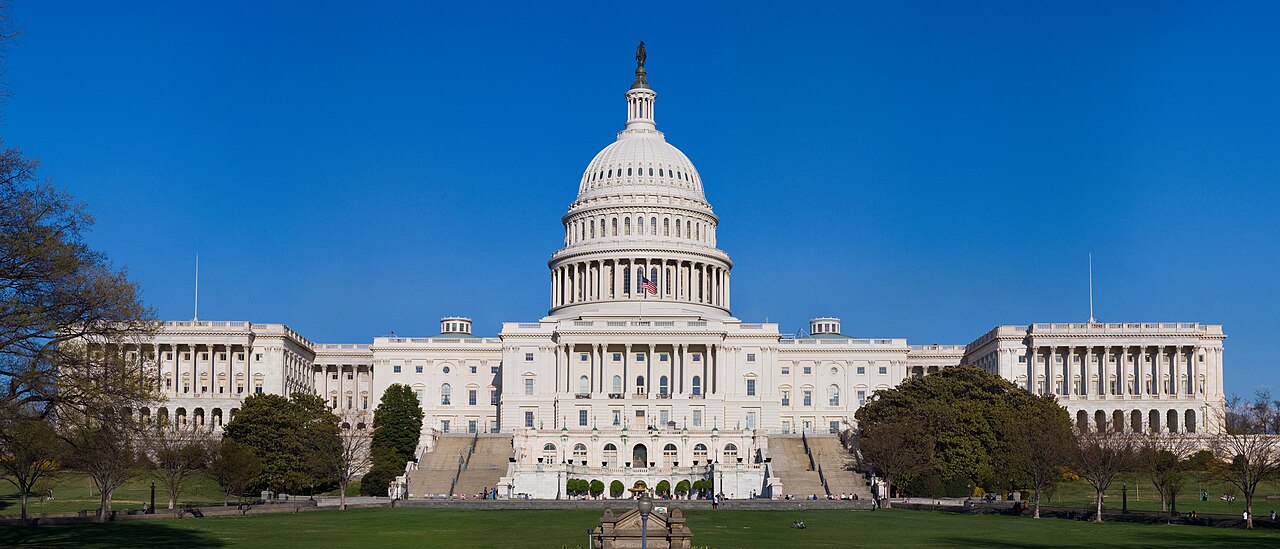
Democrats won the House of Representatives on Tuesday night and closed in on the Senate after a surprise victory in Texas, according to reporting from Brussels and Washington. The FT's Europe Express wrote that the result hands Democrats control of both chambers, with the new Congress taking its seats on 3 January. Senate tallies were still being finalised as results came in.
The mood in EU circles was captured by one senior diplomat: keep calm and carry on. The reasoning is simple. A divided Washington may spend the next two years fighting itself ahead of the 2028 presidential race, and diplomats say that would at least give Europe breathing space to build its own defence, trade and industrial capacity. Sven Franck, co-president of the liberal Volt Europa party, said Europeans should stay focused on their own problems.
Four issues matter most to Europe: military and financial support for Ukraine, the US-Israeli war with Iran that sent oil and gas prices soaring, punitive US tariffs on EU goods, and the American troop presence in Europe. On all four, analysts warn that hopes of a reversal are likely to be disappointed.
Armida van Rij and James Green of the Centre for European Reform argue that Congress has delegated much of its authority over war and tariffs to the president, and that European governments cannot assume the next generation of US political leaders will treat Europe as a priority. Congress does keep the power of the purse, which covers aid to Ukraine, and it shapes Pentagon policy through the annual defence authorisation bill.
Célia Belin, Chris Hermann and Nevada Joan Lee of the European Council on Foreign Relations reach a similar verdict in their analysis of foreign-policy currents inside the Democratic Party: Europeans hoping for a reversal should not hold their breath, and Europe was barely an issue in the campaign.
A president who loses at home often turns abroad, and Europe has reason to worry. Trump told the FT on Tuesday night that he had no immediate plans to strike Iran, which eased fears that he would reach for a foreign-policy distraction first. Diplomats also note that he was hardly a timid foreign-policy president when Republicans controlled Congress.
Volodymyr Zelenskyy, speaking at the Berlin Security Conference, put the concern in plain terms. America might stay in its alliances, he said, but it could become more focused on itself and think less about how others lose their security without it.
The first test is immediate. US and Ukrainian negotiators, with representatives from France, Germany, the UK, NATO and the World Bank, met in Brussels on Wednesday to discuss Ukraine's reconstruction and security guarantees, and a separate NATO meeting on guarantees followed on Thursday. The meetings pave the way for Ukraine-US-Russia talks in Abu Dhabi on 10 and 11 November. Many in the EU still believe Russia is not interested in negotiating.
Money is the other pressure. Brussels is trying to find 70 billion euros for Ukraine by the end of the year, the same deadline it set for the EU's next seven-year budget. If a Democratic Congress stalls US aid, Europe will be asked to carry more of the cost.
The election weakened Trump but did not change the strategic picture. Europe's job is the same as it was on Monday: build the capacity to stand on its own, from defence procurement to trade defence, and do not wait for a friendlier Washington to arrive in 2029. A Democratic Congress may slow the worst of Trump's agenda at the margins. It will not rebuild trust. Watch the Abu Dhabi talks on 10 and 11 November, and what the new Congress does with Ukraine aid when it sits in January.


