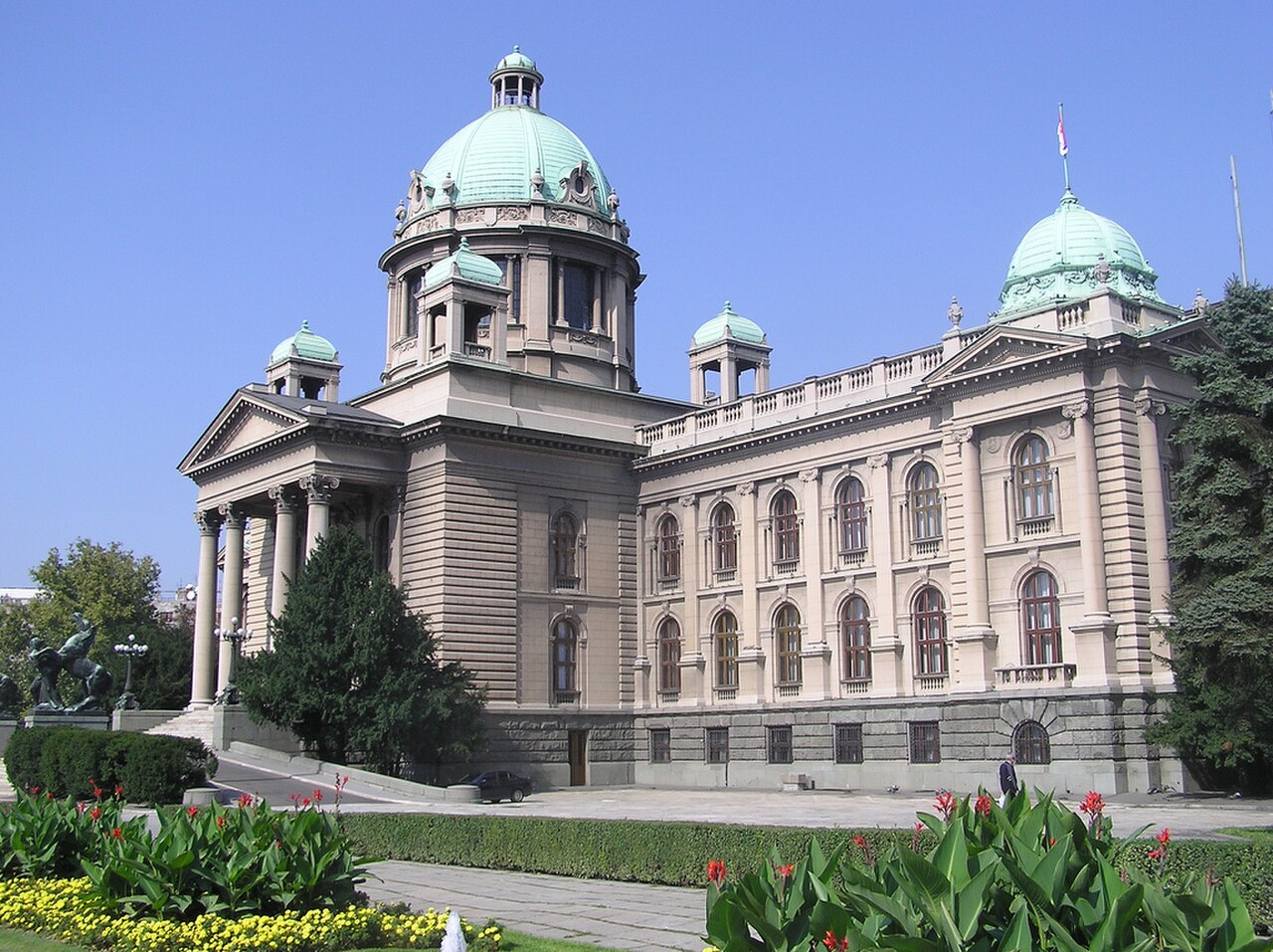
Aleksandar Vučić has run Serbia for more than a decade, first as prime minister, then as president. On Sunday night he said it plainly: "It is clear that we have lost these elections." He had resigned the presidency in September to run for prime minister, and the gamble failed. The Student List, a movement that grew out of the 2024 Novi Sad station canopy collapse that killed 16 people, is projected to hold between 135 and 140 seats. Vučić's list is on about 105. Preliminary projections elsewhere put it at 138 to 104. Turnout reached 64.9% by 6pm local time, the highest since Yugoslavia broke up in 1992, according to the State Election Commission.
Pre-election polls had Vučić's list narrowly ahead in most surveys, and prediction markets gave it roughly a 70% chance of finishing first. Forecasts went the other way, which is why the result landed as a shock across Europe.
The vote was not clean. CRTA, an independent watchdog, recorded pressure on voters or election workers at almost a third of the 500 polling stations it monitored, and CeSID logged about 260 reports of possible irregularities by early evening. They included photographed ballots, group voting and ID problems. Vučić did not contest the outcome.
The European Commission president and the European Council president issued a joint statement. "We stand ready to support reforms on the rule of law, media freedom, the fight against corruption and strong democratic institutions, and to work together to advance Serbia's future in the European Union," they said. Enlargement Commissioner Marta Kos added: "A new chapter can begin for Serbia. The door to the EU is open, and we are ready to move forward together."
The warmth is deliberate. Serbia has been a candidate since 2012 and opened its first negotiating chapters in 2014, yet progress has been slow for years. The research institute V-Dem classifies the country as an electoral autocracy, and Reporters Without Borders ranked it last among EU and accession countries for press freedom last year. Under Vučić, Belgrade also kept close to Moscow. Serbia still imports most of its gas from Russia through the TurkStream pipeline, and on voting day Vučić said he looked forward to strengthening co-operation with the Kremlin if he won.
The new majority is not an EU-accession party in disguise. Its campaign centred on corruption and the rule of law, and it did not make membership a headline promise. But the demands overlap with Brussels' list: independent courts, free media, accountable institutions. List leader Ilija Srdanović told the victory rally: "Never again to tyranny in our country!" Who becomes prime minister is still open. The formal results, the first sitting of parliament and the coalition arithmetic with the handful of minority-party seats still have to come.
The comparison being drawn in European capitals is Hungary. Péter Magyar, who ended Viktor Orbán's rule in April with a similar grassroots anti-corruption movement, phoned the Student List leaders on Sunday night. He told them he was delighted at how much strength Hungary's victory had given them.
Bulgaria voted the same day in the first round of its presidential election, and the result there points the other way. Incumbent Iliana Yotova, who advocates re-engagement with Moscow, and former caretaker prime minister Andrey Gyurov finished neck and neck, and pollsters disagree on who came first. The election was overshadowed by Russian interference and record-low turnout. They meet in a run-off on 1 November.
Two Russia-friendly leaders have now lost to anti-corruption movements in six months, in Budapest and Belgrade. For the EU that is an opening, and a test of its own habits. Enlargement has stalled partly because candidates did not deliver reforms. A Serbian government that wants to deliver them will expect Brussels to move faster than it has. Three things to watch: the final count and any legal challenges, who becomes prime minister and how a coalition is built, and whether the Commission's enlargement package, expected in early November, signals a faster track for Serbia. If Brussels answers warmth with delay, the students may learn the lesson Serbian governments have taught for a decade.