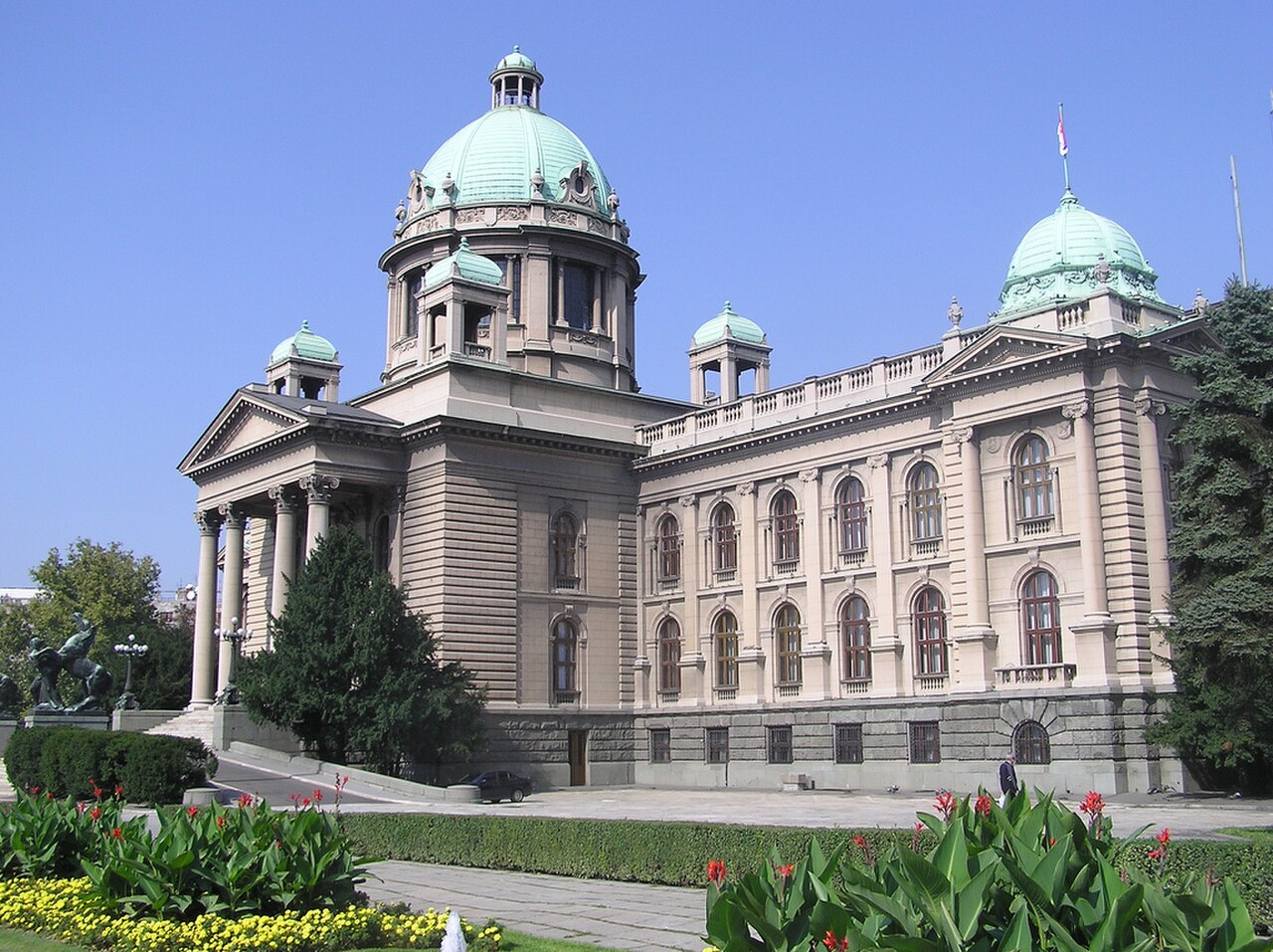
Serbia goes to the polls on Sunday in what may be the hardest test of Aleksandar Vučić's career. He has run the country for 14 years. He gave up the presidency to lead the Serbian Progressive Party's list as its candidate for prime minister, and the opponent is not a party at all. "Student List – Students Win" grew out of the protests that began after the concrete canopy at Novi Sad's railway station collapsed on 1 November 2024 and killed 16 people. It has registered 250 candidates for the 250-seat National Assembly.
The polls do not agree, and that is the story. Ipsos, in a survey commissioned by the ruling list and published on 22 October, gave Vučić's camp 47.4% and the students 40.0%. The pollster NSPM, whose fieldwork ended on 5 October, had the students ahead on 44.5% to 42.7%, with 18.3% still undecided. The PolitPro aggregate on 23 October averaged it out at 45.0% to 42.5% for the government. Prediction markets give Vučić's list roughly a 70% chance of finishing first.
The system is proportional. Serbia elects its parliament from a single nationwide constituency, with a 3% threshold for most lists, and a party needs 126 seats for a majority.
The student list held its final rally in Belgrade on Thursday. Independent monitors at the Archive of Public Gatherings counted about 150,000 people. On 21 October, police arrested six people on suspicion of plotting violence on election day. Prosecutors have not tied them to any party.
The mood among government supporters looks flatter. Analysts say Vučić's voters appear less motivated, and the opposition senses a rare opening. A high turnout would most likely help the students.
Slobodan Tomić, a political scientist who spent years researching Serbian elections at the University of York, names at least three routes. Voters can be bussed in or invented, and ethnic Serbs from Bosnia have been brought to polling stations in earlier elections. Voting is made hard for Serbs abroad, who have far fewer polling stations and must cast ballots on Central European Time, which can mean voting in the middle of the night in Australia. And a government can claim victory as soon as the polls close and let the institutions follow.
Registration data back part of the worry. Many municipalities have more people on the electoral roll than there are adults living there, in some places by half again. "Fraud will be an extremely important factor in this election," Tomić said. "The opinion polls are very close and it might indeed take just a little bit of fraud to push the result one way or the other." There is a limit to it, he adds, and that limit is the point of the exercise: a large enough turnout is hard to hide.
The timing matters in Brussels as well. On Thursday, at the Berlin Process summit in Montenegro, German Chancellor Friedrich Merz said it is in Europe's shared interest that the path of the Western Balkan states "leads irreversibly toward the European Union". He warned against divisive rhetoric and polarisation. Some leaders from the region left frustrated by how little accession progress they have seen. Serbia opened its first negotiating chapters in 2014, and the process has moved slowly ever since.
An EU candidate country is voting on Sunday with a fraud risk the EU's own officials will struggle to ignore. If Vučić's list wins by a thin margin and the vote is contested, Brussels faces an awkward choice between accepting a flawed result and pressing a government it has long courted. If the students win, they would inherit a state with deep ties to the ruling party, an untested coalition, and a pro-EU agenda that is more a set of anti-corruption demands than a foreign policy. Either way, watch the observer reports in the first days of the week and the turnout figures: they will decide how much of the result Serbia's neighbours, and the EU, are willing to believe.