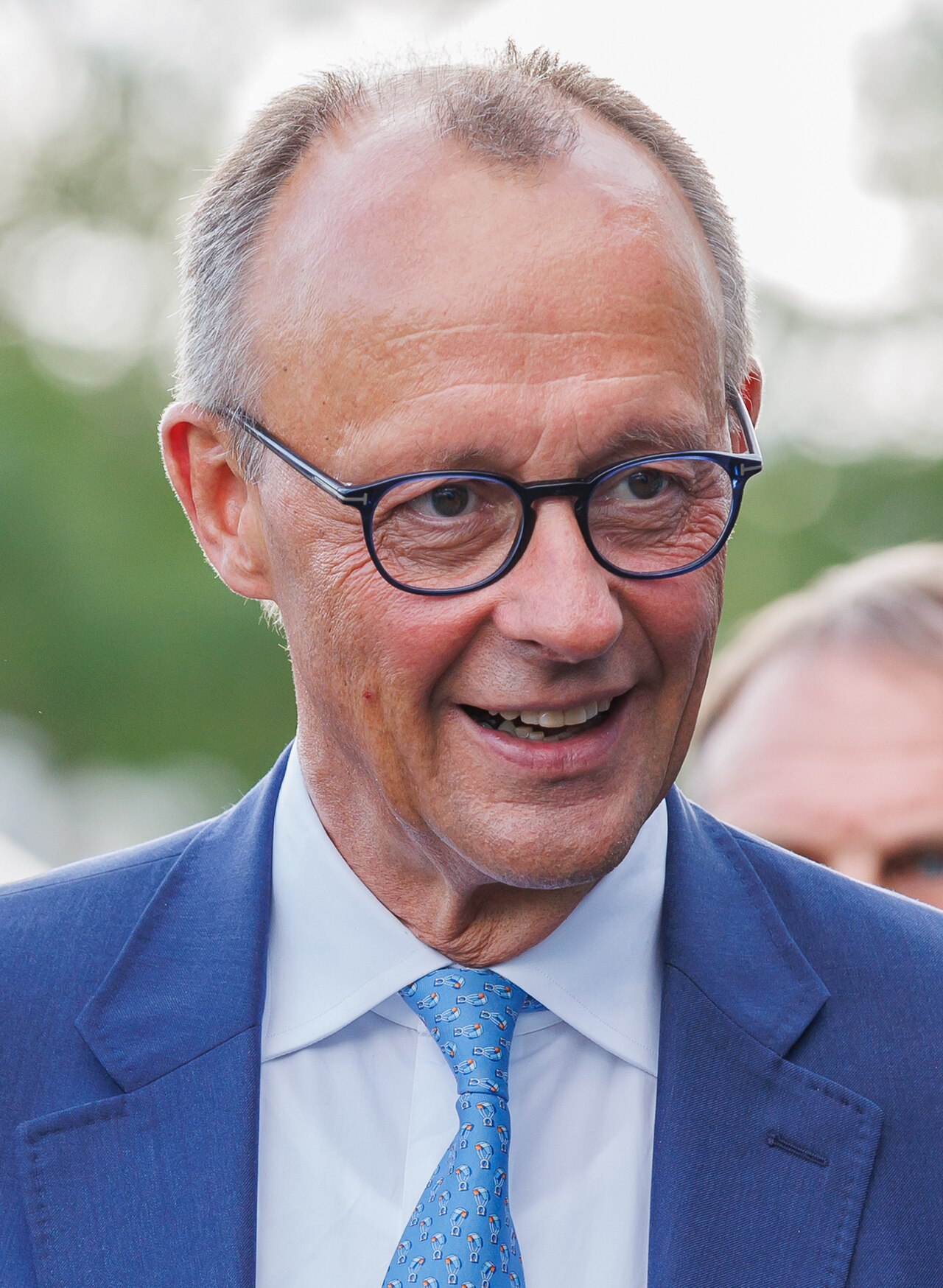
The fight over the European Union's next seven-year budget started properly on Thursday, in Berlin, over lunch.
Friedrich Merz invited the leaders of the EU's other main net contributors to the chancellery for what German officials described as a mini summit of the like-minded. The Netherlands, Austria, Finland and Denmark were expected, with Sweden also named among the invitees. All of them pay more into the EU budget than they receive from it. All of them think the European Commission has asked for too much.
The Commission has proposed a multiannual financial framework of 2 trillion euros covering 2028 to 2034. The current framework, running from 2021 to 2027, is 1.3 trillion. Inflation over the intervening years was unusually high, which accounts for part of the increase but nowhere near all of it.
Berlin's position is that around 400 billion euros should come out. Merz has been saying so in public for months. "The proposal on the table is far too high," he said earlier this summer. "The figures need to be reduced." In Dublin last month he called the cuts essential and said he trusted the Irish government to produce something realistic.
That last remark matters more than it sounds. Ireland holds the rotating presidency of the Council, which makes it responsible for turning 27 incompatible positions into a text. A revised compromise is due before EU leaders meet in mid-October, and the stated goal is a deal by the end of the year.
The frugal group is not arguing only about the total. It wants the money that survives redirected: more for defence, competitiveness and strategic autonomy, less for agriculture and cohesion. That is a redistribution from the EU's south and east towards its north and west, which is why it will be resisted by more member states than it is supported by.
Antonio Costa has spent August doing the opposite of what Merz is doing. Rather than assemble a bloc, the European Council president is visiting capitals one at a time. He began with Robert Fico in Bratislava, where he heard the case for strong cohesion funding and more money for the eastern member states, and he met Andrej Babis in Prague on Thursday.
Costa also published an opinion piece to open the tour, and the reception says a great deal about the negotiation. Outlets in 24 of the 27 member states ran it, and each found a different article in the same text. The German press led on setting priorities when resources are limited. The French press led on the conditions for strategic autonomy. A Danish paper pulled out his line about keeping national contributions within reasonable limits. Italian coverage led on defence, Irish coverage on competitiveness. Finnish and Dutch outlets declined it altogether, which for two members of the frugal camp is its own kind of statement.
His substantive proposal is to change where the money comes from. Costa is pressing leaders to agree new EU-wide revenues projected to raise around 66 billion euros a year. Every euro raised that way is a euro national finance ministries do not have to transfer, which is the only argument likely to move a net contributor. It is also the argument national parliaments are most reluctant to accept, because it moves taxing power upwards.
Emmanuel Macron did not attend. German officials briefed beforehand that there was nonetheless a high degree of consensus between Paris and Berlin.
Both halves of that can be true. France is a net contributor and wants the total controlled. France is also the largest agricultural beneficiary in the Union and will not accept the cuts to farm spending the frugal group is proposing. Sitting out a lunch whose central demand is redirecting money away from agriculture is a way of agreeing with the arithmetic without endorsing the conclusion.
France has its own reason for caution. Investors now treat Paris rather than Rome as the main source of concern about European debt sustainability, with budget difficulties and the 2027 election both in view. A French president has limited room to argue for a bigger European budget while under that scrutiny, and no room at all to argue for a smaller farm envelope.
Budget negotiations in the EU always end with a number lower than the Commission proposed and higher than the frugals demanded, arrived at some hours after a deadline. That will probably happen again. The question worth watching is not the headline figure but whether the composition changes.
Every European strategy document of the past two years has said the same thing: the Union must spend on defence, energy and competitiveness, and it cannot do that while two-thirds of its budget is committed to agriculture and cohesion. Ursula von der Leyen was in Paris on Thursday making exactly that case, promising to put industrial capacity back at the heart of the Commission's work. The frugal group is, on this narrow point, asking for what the Commission's own analysis says is needed.
The obstacle is that cohesion and farm money are the parts of the budget with named beneficiaries in every constituency in Europe, and defence and competitiveness spending is not. A budget deal that cuts the total and leaves the composition intact would be the worst of both outcomes: less money, spent the same way. On current form that is also the most likely one.