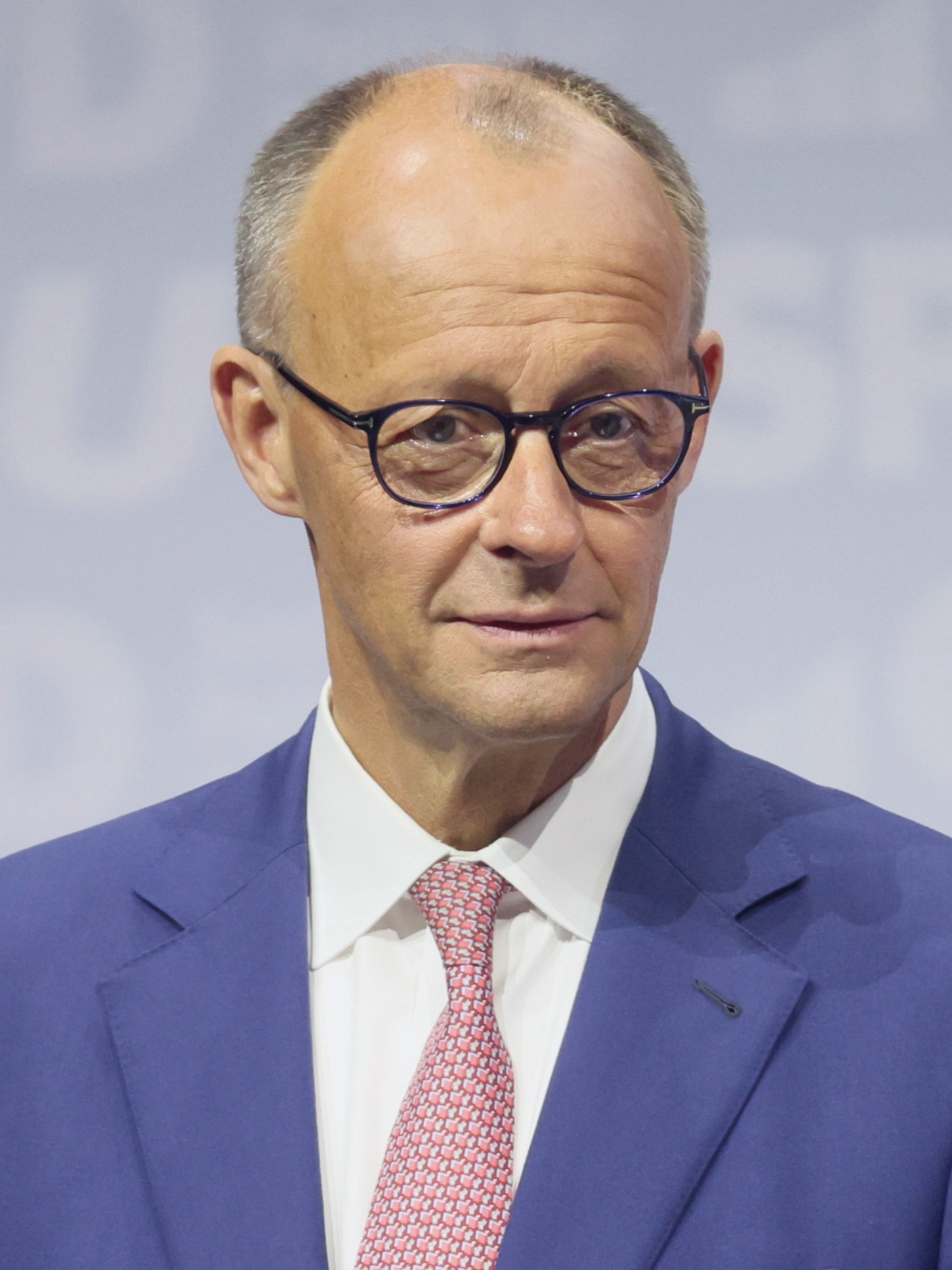
Germany pays more into the EU budget than any other country. Friedrich Merz has now decided to use that weight.
In a letter to European Council President António Costa, the chancellor called a unanimous agreement on financing Ukraine a "prerequisite" for talks on the 2028-2034 budget, and for "any further matters, particularly those with financial implications". In plain terms: no Ukraine deal, no German yes on the budget.
The money in question is Ukraine's funding gap for 2027, which Kyiv puts at around €70 billion. At their October summit, EU leaders asked the Commission to find ways to cover it, and Brussels has pledged roughly €45 billion, or about two-thirds. A new round of joint EU borrowing is the leading option.
Economy commissioner Valdis Dombrovskis has signalled that his options paper will aim for a solution backed by "the EU 27, not by the EU 24 or other number of countries". That is aimed squarely at the governments that sat out last December's €90 billion loan. Hungary, Slovakia and Czechia were excused from paying interest on it. Bulgaria now says it wants out of future credit lines too.
Merz went further than the Commission. He also wants leaders to drop the unanimity requirement for future Ukraine loans, so that one or two capitals can no longer hold up the money. Diplomats read it as a message to Moscow, which is betting that more Ukraine-sceptic leaders will win elections across Europe next year.
Bratislava answered within a day. "We must respond to blackmail," Fico said. "We have the same veto as the German federal chancellor." Standing next to him, Czech prime minister Andrej Babiš argued that the Commission's draft budget already sets aside €100 billion for Ukraine. The catch, as he acknowledged, is that this money only starts flowing in 2028, a year after Kyiv's hole opens.
Hungary's Péter Magyar was in Berlin when the letter landed. He told Merz the two issues should be kept apart, and said Hungary's deficit and domestic politics rule out new EU-level debt. He declined to call it blackmail, but said the linkage "does not necessarily have a good message". Bulgaria's Rumen Radev cited his own deficit and insisted Sofia was "in no way blocking" decisions in the Council.
All four belong to the Friends of Cohesion, a group of 17 mostly poorer countries defending farm and regional funds against frugal net payers such as Germany. Merz's frustration is partly about that fight too: he resents being asked to pay more for cohesion while some of its biggest recipients opt out of helping Kyiv.
The resistance is not limited to Ukraine sceptics. Finland and Estonia, two of Kyiv's firmest backers, also dislike the linkage and warn that holding the budget hostage could end up hurting Ukraine's war effort. Estonian finance minister Jürgen Ligi pointed out that the Nordic and Baltic states already give far more to Ukraine relative to the size of their economies. "The ones who are talking in the loudest voice are not necessarily offering the most," he said.
The timing is awkward. US, Ukrainian and Russian envoys are meeting in Abu Dhabi, EU leaders gather in Dublin on Friday, and an extraordinary budget summit follows on 26-27 November.
Merz has turned two hard negotiations into one, betting that the budget is the only lever big enough to bring the holdouts on board. It may work: few countries can afford to be blamed for blocking a seven-year budget. But it also hands Fico and Babiš a veto over the thing Germany wants most, and it irritates allies who give Ukraine more than Berlin does relative to their size. If the gamble fails, Kyiv's 2027 money and the EU's next budget could stall together, at the moment Moscow is watching most closely for European division.