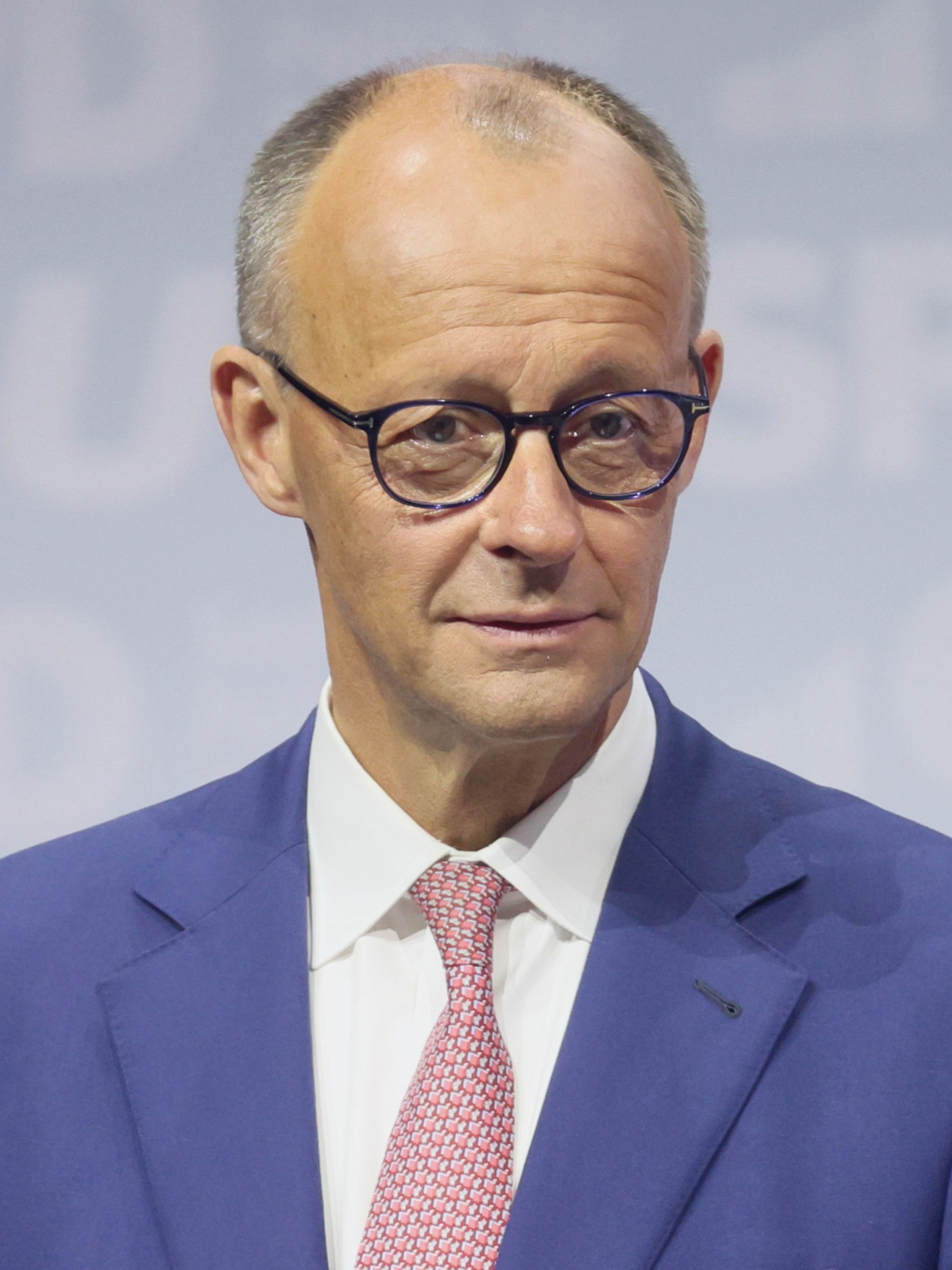
The AfD's first outright win in a German state election is a week old, and the damage has landed in three places at once. Inside the CDU, where Friedrich Merz's authority is being questioned by the people who put him in the chancellery. In the bond market, where the yield on ten-year Bunds rose to roughly 3.52% on Friday, the highest since August 2009. And across Europe's populist right, which has responded to the AfD's 43.8% in Saxony-Anhalt not with celebration but with distance.
That third reaction is the one Berlin has paid least attention to, and it is the one that matters most for how the AfD's rise plays out beyond Germany.
The congratulations came from the United States. They did not come from the governments and parties that the AfD would consider its natural allies.
Antonio Tajani, Italy's foreign minister and the leader of Forza Italia, told Corriere della Sera on 8 September that the AfD's victory was "very bad news" and went further than any other European minister. "I want to say this to those in our country who harbour sovereignist dreams: German sovereignists are Italy's worst enemies," he said, recalling that the AfD "was founded precisely to take a hard line against Southern countries, and Italy in particular" during the euro crisis. He was speaking for a coalition that is divided on the point: Matteo Salvini's League welcomed the result, and Tajani conceded that he and Salvini hold "diametrically opposed positions" on the AfD, while insisting that the government's line is set by Giorgia Meloni, who is "certainly not anti-European or anti-Atlanticist".
In France, the Rassemblement National chose silence. Marine Le Pen and Jordan Bardella, who are running for president and prime minister in 2027, made no public mention of the AfD's win. Éric Zemmour's Reconquête, which sits with the AfD in the European Parliament, celebrated it. RN figures who did speak were careful: the party's decision to stop being the AfD's ally in Strasbourg, taken when the Identity and Democracy group expelled the AfD in May 2024, remains "unchanged", MEP Pierre-Romain Thionnet said, citing "positions on historical and remembrance issues that we find unacceptable" and "very significant differences" on foreign policy. Another Patriots for Europe MEP put it more bluntly: "nothing will move before the French election," because "no one wants to be associated with the AfD."
In Britain, Nigel Farage has described the AfD's closeness to Vladimir Putin as "very, very problematic". The pattern is consistent. Europe's most successful nationalist parties have spent years making themselves electable, and a German party that outperforms them all is, for now, a liability rather than a model.
At home the picture is inverted. The AfD did not need European allies to win Saxony-Anhalt, and the CDU's 17.2% there has done more to shake Merz's standing than any opposition attack.
The next test comes in a week. Mecklenburg-Vorpommern votes on 20 September, and polls put the CDU at around 7%, close enough to the 5% threshold that some Christian Democrats openly fear falling out of a state parliament altogether. Merz reaffirmed the firewall against cooperation with the AfD after the vote. That satisfies Brussels, and Tajani said he agreed with it, but it does not answer the question his own MPs are now asking, which is whether he can win anything with it.
Signs of that doubt are appearing in unusual places. The Parlamentskreis Mittelstand, the business-friendly caucus of CDU/CSU deputies that has long been Merz's power base, hosted the chancellor on Wednesday evening. The summary offered afterwards by one participant was that the best part was the food. The names of Hendrik Wüst and Markus Söder are circulating again as alternatives. Economists are pressing for bolder structural reform, and the SPD is signalling that it will block even the minimum. Writing in Bloomberg Opinion, Chris Bryant called the Saxony-Anhalt result "a watershed in the country's postwar history" and said he was not confident Merz was up to the task of answering it.
The week brought one more shock that has been almost ignored: German pupils recorded their worst ever PISA result on Tuesday. Calls for a national education summit have gone unanswered, which says something about how much bandwidth the government has left.
Merz's plan for beating the AfD was always economic: borrow, invest, grow, and give voters a reason to trust the centre again. The bond market is now pricing that plan.
Ten-year Bunds climbed above 3.5% on Friday, a level last seen in 2009. The drivers are mostly external. The escalating war with Iran has pushed oil towards $110 a barrel, a new conflict with the Houthis is disrupting shipping, and US Treasury yields briefly crossed 5% after the latest inflation print. Governments are competing for capital with the AI industry's own flood of bond issuance, and the large buyers of the last decade, China and Japan, are absent. One strategist described the market as being in "capitulation mode". Eyes now turn to the Federal Reserve's meeting on Wednesday.
None of this is Germany's fault, but all of it lands on Germany. The debt-financed defence and infrastructure programme Merz pushed through in 2025 was designed for a world of cheap Bunds. At 3.5% the arithmetic still works, but the political margin for a government that has promised growth and delivered a record PISA failure and a far-right state government is far thinner than it was a week ago.
Saxony-Anhalt has produced two different stories that are easy to confuse. In Germany, the AfD is stronger than it has ever been and the chancellor is weaker than he has ever been; Mecklenburg-Vorpommern on 20 September will show whether the CDU's collapse in the east is a regional event or a national one. In Europe, the opposite is true. The AfD's win has made Meloni's coalition, Le Pen's party and Farage's movement more careful about it, not less, because each of them is trying to win a national election on the argument that they are not that kind of party. The far right's European coalition does not get stronger when its most radical member wins. That is a small consolation for Berlin, and it is not one Merz can spend. His opponents this month are inside his own party and in the bond market, and neither of them cares about the firewall.