

The European Commission's spring economic forecast, published on 21 May, has put numbers to what Europe's finance ministers have been quietly worrying about for weeks. The Iran war is delivering exactly the kind of economic shock that is hardest to manage: growth is falling while inflation is rising, and there is no obvious policy tool that addresses both at once.
Euro area GDP is now projected to grow at 0.9% in 2026, down from 1.4% last year. EU-wide growth sits marginally higher at 1.1%. Inflation across the bloc will hit 3.1% — a full percentage point above the Commission's November forecast — before easing to 2.4% in 2027. Employment growth slows to 0.3%.
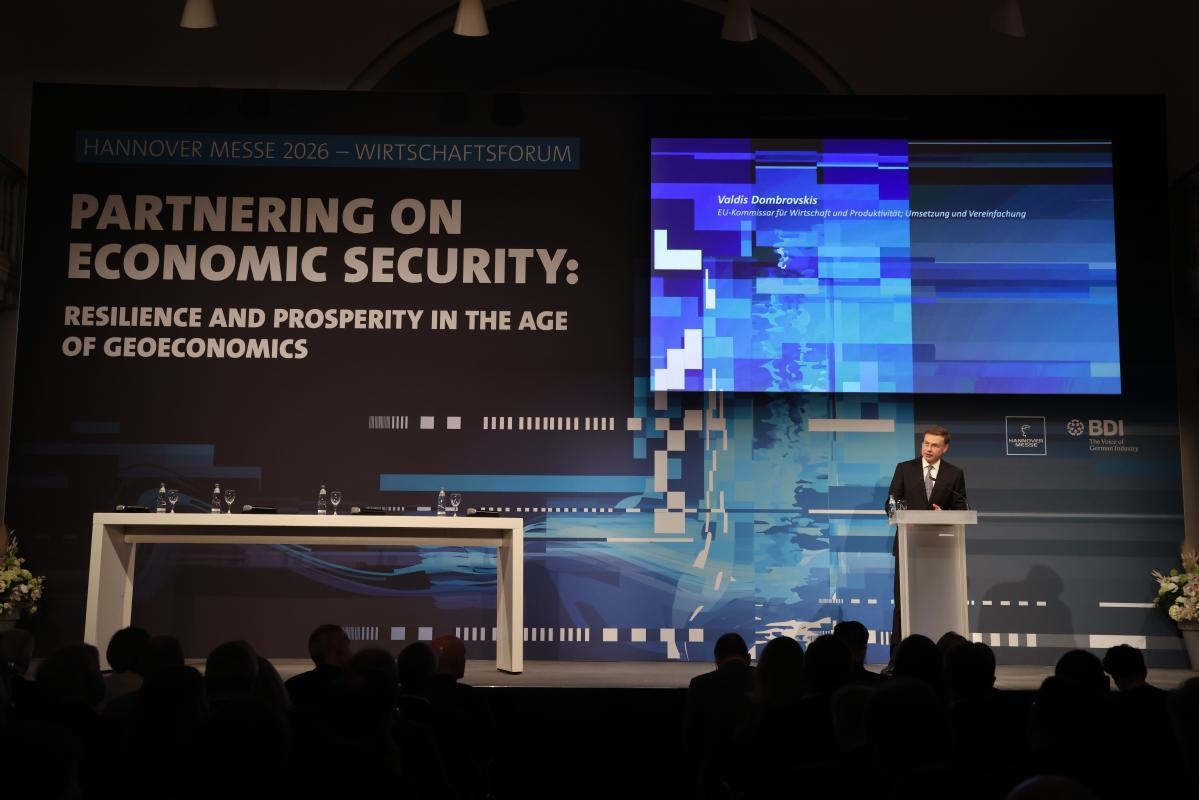
Economy Commissioner Valdis Dombrovskis called it plainly: a "stagflationary shock." The term describes a combination that leaves policymakers with almost no good options. Raise rates to fight inflation and you choke off growth. Cut rates to stimulate the economy and inflation runs further out of control.
For individual member states, the forecasts carry specific warnings. The EU's aggregate debt-to-GDP ratio is expected to rise to 84.2% this year, from 82.8% in 2025, driven by growing deficits in France and Italy. French Prime Minister Sébastien Lecornu is preparing relief measures for households hit hardest by energy bills; Italy's Giorgia Meloni has already asked Brussels for greater flexibility on energy-related spending and fiscal rules.
Dombrovskis drew a firm line. "Countries should stick with temporary and targeted responses," he said at Thursday's press conference — a coded message to Paris and Rome not to use the energy shock as cover for sustained fiscal loosening that would breach EU budget rules.
Lithuania's finance minister, Kristupas Vaitiekūnas, put the deeper problem in stark terms. European governments are pledged to reach 5% of GDP in defence spending by 2035, following commitments made at last year's Hague NATO summit. Against a backdrop of 84% debt ratios, rising deficits, and a slowing economy, the arithmetic is punishing.
"If we go like we are now, with our fiscal structure, we can go like this for five to ten years, something in between," Vaitiekūnas said. "If we want to make defence spending sustainable long term, of course we have to find additional financing." He described the situation as "a political thing" as much as a fiscal one, adding that he was "very worried" about the tight positions of the bloc's major economies.
The forecast is built on futures market prices for oil and gas, which assume current elevated levels eventually ease. If they do not — if the Strait of Hormuz stays effectively closed past its current shaky ceasefire — the Commission projects that EU growth prospects could be "roughly halved both this year and next." That would push euro area growth close to zero. Dombrovskis declined to name a specific worst-case figure, but the implication was clear.
Stagflation puts European governments in a bind that is as much political as economic. The ECB faces the same dilemma on monetary policy as national treasuries: there is no rate that is right for both problems simultaneously. Meanwhile, NATO foreign ministers gathered in Helsingborg, Sweden this week — the last high-level meeting before July's Ankara summit — where the United States is pressing allies to increase defence spending substantially. Europe is being asked to spend more precisely as its fiscal room is contracting. The spring forecast doesn't change that political reality. It prices it.


