Europe's economy has taken an energy shock, a rate-hiking central bank and a wobbly world, and it is still growing faster than Brussels expected. In its Autumn 2026 Economic Forecast, published on Tuesday, the European Commission raised its growth call for the 21-member euro area to 1.2% for 2026 and 2027 and 1.3% for 2028. In May it had expected just 0.9% this year. For the EU as a whole, it sees growth of 1.4% in each of 2026 and 2027 and 1.5% in 2028. EU GDP grew 1.3% over the first three quarters of this year, beating the spring projections.
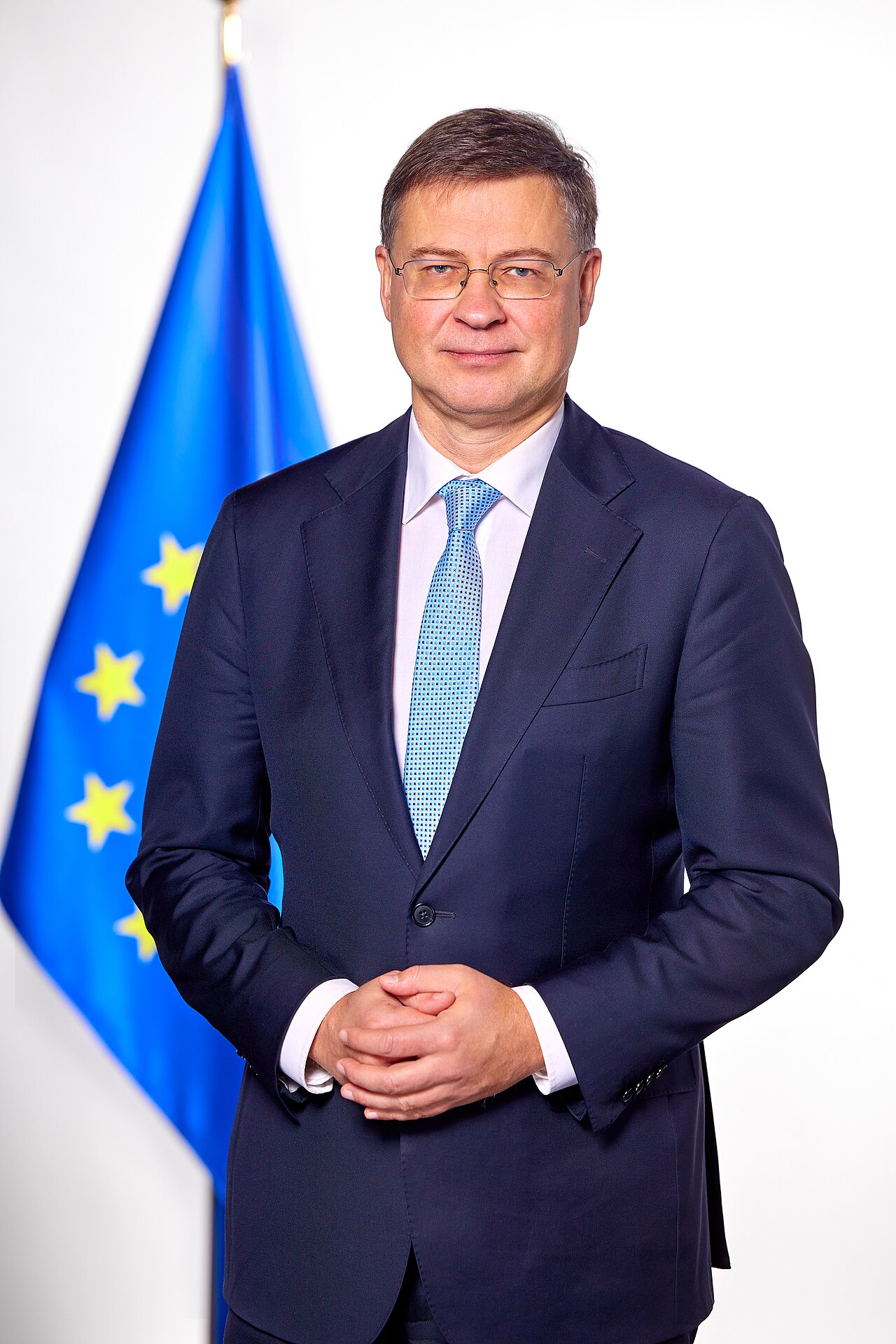
"In 2026, Europe's economy is holding up better than expected," said Valdis Dombrovskis, the commissioner for the economy. Then came the caveat: Europe cannot "be content with resilience alone".
Two things explain the upgrade. The first is exports. EU firms supply much of the power, cooling and chip-making equipment that goes into the data centres being built around the world, and the global investment boom in AI and electrification is pulling those sales up. The Commission expects exports to grow 3.2% this year.
The second is jobs. More than 800,000 extra people are expected to be in work in 2026, and wages are rising about 3.8% this year and 3.7% next. That keeps households spending: private consumption is forecast to grow 1.3% in 2026. Savings remain unusually high, though. The household saving rate is only expected to fall to 14.1% by 2028, still above the pre-pandemic average of about 12%.
Investment is the soft part of the picture. Its growth halves from 2.6% last year to around 1.5% on average in 2026 and 2027. Housebuilding is flat. Public works are being held up by the last of the EU's pandemic recovery money, and that support runs out as the Recovery and Resilience Facility winds down.
The other side of the ledger is prices. Brent crude went above $100 a barrel in October. Diesel prices have roughly doubled from a year ago. Dutch TTF gas traded above €95 per megawatt-hour in late October, more than three times its level in late February. Energy inflation in the euro area ran at about 21% in October, and headline inflation hit 4.0%.
The Commission now sees euro-area inflation at 3.2% this year and 3.1% next, only easing to 2.1% in 2028. EU inflation is expected to peak above 4% around the turn of the year. Dombrovskis said energy prices would stay "higher for longer" and that the inflation forecast had been revised up to match.
That keeps the European Central Bank busy. It raised rates by a quarter point in both June and September, and markets expect three or four more hikes, taking the deposit rate to around 3.4% by mid-2027. Borrowing costs are climbing across the board. The German ten-year Bund yield is about 3.4%, up from 3.0% in the spring, and spreads between EU governments have widened.
Higher rates feed straight into budgets. The Commission expects the EU deficit to widen from 3.6% of GDP this year to 3.8% in 2028, driven by defence spending, higher interest costs and energy relief for households. Interest payments rise from 1.9% of GDP in 2025 to 2.4% in 2028, the highest share in more than a decade. Euro-area debt climbs from 88.6% to 91.3% of GDP.
Dombrovskis's message to capitals was "fiscal prudence": governments must keep their budgets in line with their agreed medium-term plans and EU rules. He also noted that investors are now "differentiating" between euro-area countries, which is a polite way of saying markets are charging some governments more than others.
The clearest example is France. The Commission expects French growth to slow to 0.4% this year before a weak pick-up to 0.6% in 2027, and sees Paris missing its deficit-reduction targets both this year and next as debt-servicing costs rise. French yields have risen faster than most.
The politics are not helping. Paris has struggled to agree a budget, unions and students are back on the streets over the cost of living, and the presidential race is heating up ahead of next year's election. Far-right frontrunner Marine Le Pen has just promised to bring the retirement age down to between 60 and 62 and to offer full pensions after fewer years of work. Rivals called the plan unaffordable. Brussels did not need to comment; its numbers did that.
The Commission's list of downside risks is long: the Middle East conflict and Russia's war against Ukraine, hybrid attacks, trade-policy uncertainty, a correction in richly valued and highly concentrated equity markets, especially in the US, renewed rises in long-term interest rates, and extreme weather. On the upside, faster AI adoption could lift productivity in European manufacturing, defence and infrastructure investment could come in stronger, and oil and gas prices could fall after the US mid-term elections, pulling inflation down in 2027 and 2028.
This forecast tells Europe it has dodged a recession, not that it has found a growth model. The growth is real but thin, and much of it rides on a global data-centre boom that Europe supplies rather than leads. The price is inflation that will run well above target for another year, a central bank still raising rates, and interest bills that eat a growing share of national budgets. The sharpest risk sits in Paris, where a slowing economy, rising yields and a pension promise from the polling leader are coming together just as the bond market starts to treat euro-area governments differently. "Our ambition must be to turn Europe's resilience into real economic dynamism," Dombrovskis said. The forecast shows how far there is still to go.