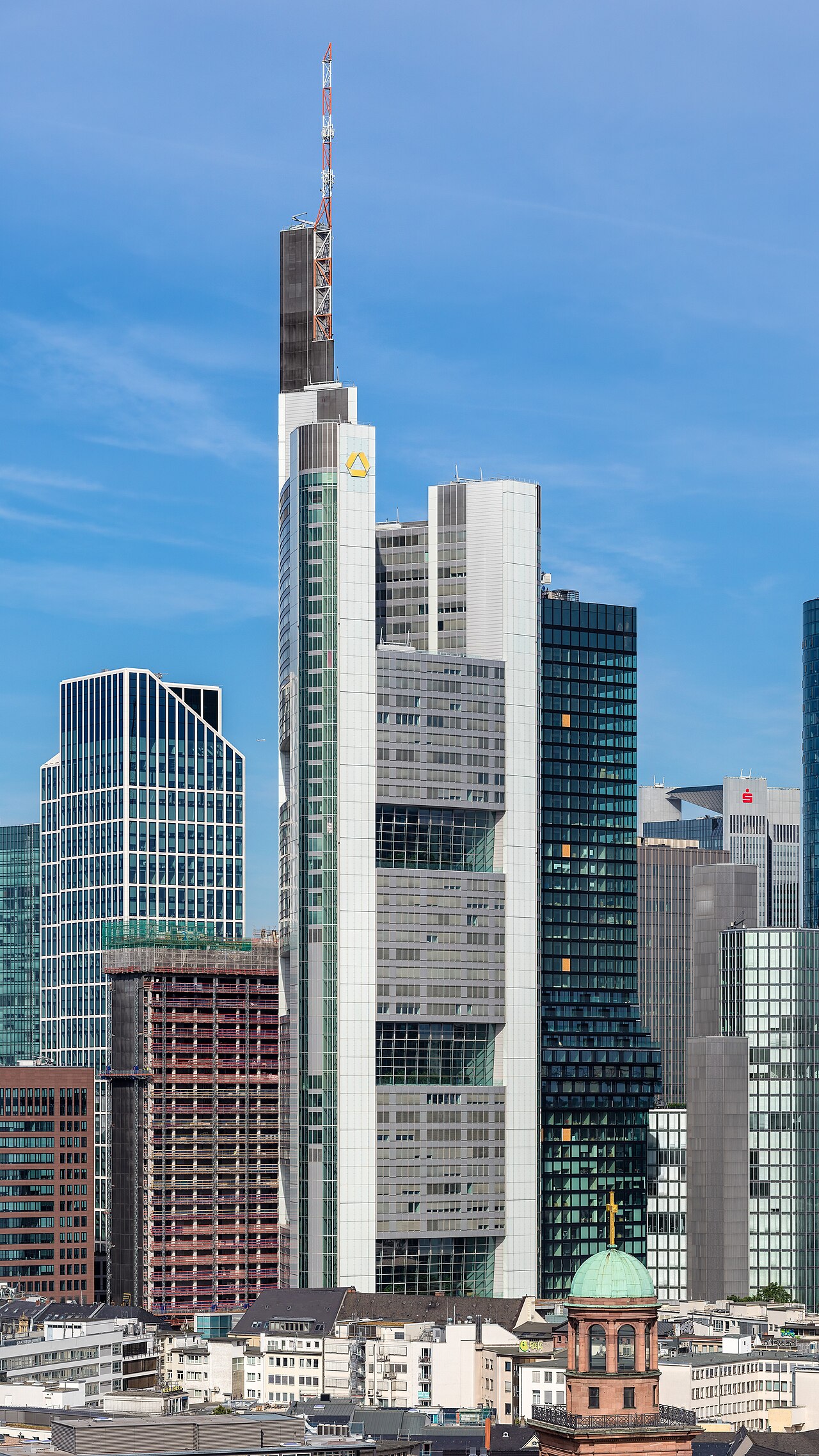
Two years after UniCredit first built a stake in Commerzbank, the regulators have run out of objections. On Wednesday Poland's Financial Supervision Authority (KNF) cleared the indirect change of control over mBank, the Warsaw-listed lender in which Commerzbank holds 69.1%. It was the final approval UniCredit needed. Brussels had already cleared the deal without conditions earlier this month.
The approval unlocks the shares tendered in UniCredit's exchange offer of 0.485 UniCredit shares for each Commerzbank share, which values the German bank at about €39 billion. Before delivery, UniCredit held 27.93% of Commerzbank's capital and 28.74% of the votes. Once the tendered shares are transferred, which is expected by 7 December, that rises to about 46.29% of the capital and 47.64% of the voting rights. Counting derivatives, UniCredit's reach is close to half the bank.
Andrea Orcel is not waiting. UniCredit's chief executive wants to chair Commerzbank's supervisory board himself, replacing Jens Weidmann, the former Bundesbank president. The nomination still has to pass a fit-and-proper review by supervisors.
UniCredit has asked Commerzbank to call an extraordinary general meeting to replace nine of the ten shareholder representatives on the supervisory board. Only Michael Gorriz would stay. Commerzbank says it will examine the request and has not set a date. Reports point to January or early February.
UniCredit also wants the supervisory board to agree exit terms with several members of the management board. If they are not agreed first, it will seek a vote of no confidence at the meeting. It has not said how many executives it wants out.
Bettina Orlopp, Commerzbank's chief executive, fought for her bank's independence for two years. She now says the board's job is to manage an orderly transition and keep the bank fully able to act, whoever ends up running it. It is an awkward twist: the manager who tried hardest to stop the takeover is the one organising the buyer's arrival.
Berlin has also stepped back. The German government still holds about 13.3% of Commerzbank, a legacy of the 2008 bailout. It did not tender those shares and has not announced a sale, but it dropped its opposition after UniCredit gave eight binding commitments, and it will give up its two seats on the supervisory board.
For Poland the deal changes who ultimately owns one of its biggest banks. mBank will now sit inside an Italian group rather than a German one. Polish commentators are already asking what the change means for mBank's management, its staff and its strategy in a market where UniCredit used to own Bank Pekao.
For years EU officials have complained that Europe's banks stay national even though the euro area shares a single supervisor. A big cross-border merger was supposed to be the proof that banking union works. UniCredit and Commerzbank are about to become that test, but not in the friendly form Brussels hoped for. The deal went ahead over the German government's objections, which were bought off with commitments rather than overcome by argument. If Orcel can run Commerzbank without a political backlash in Berlin, other cross-border bids will follow. If the integration stalls, governments elsewhere will treat it as a warning about letting a foreign rival in through the stock market.