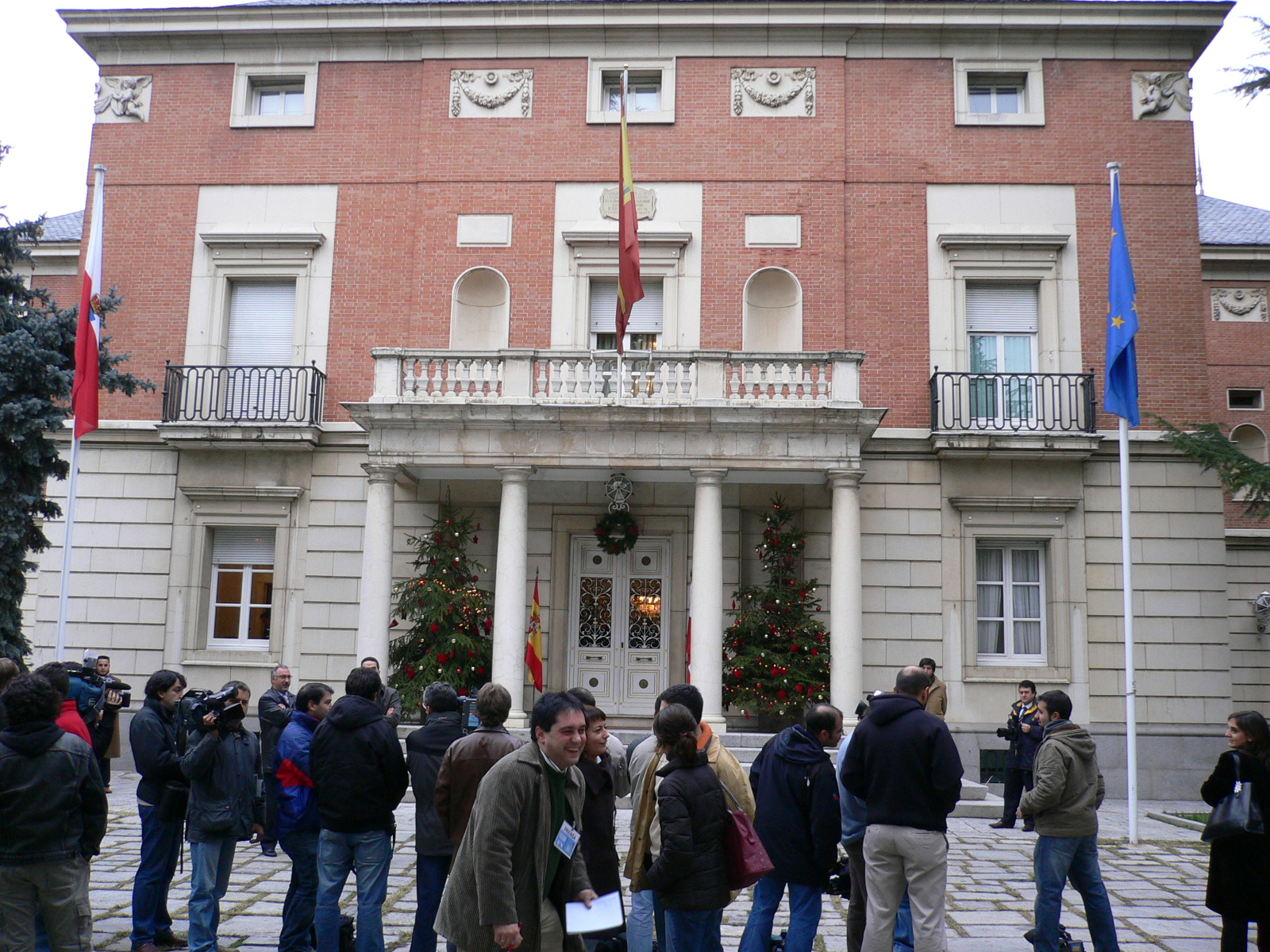
Serbia ends its year of upheaval at the ballot box. Aleksandar Čupić, the parliament speaker who has served as acting president since Vučić quit, signed the decision at noon on Thursday setting the presidential election for Sunday 27 December. "Building democratic institutions is the task of all of us," he said, adding that he hoped voters would face a difficult choice between strong candidates.
The vacancy is of Vučić's own making. He resigned the presidency in September, cutting his second term short, to run for prime minister in the snap parliamentary election of 25 October. The gamble failed. The Student List, a grassroots movement born from the protests that followed the Novi Sad station canopy collapse, swept his Serbian Progressive Party out of its majority. Vučić is now leader of the opposition.
On Friday the movement named its candidate. Radomir Saičić, 65, teaches organic chemistry at the University of Belgrade and is a member of the Serbian Academy of Sciences and Arts. He also stood on the Student List's ticket in October. Vučić has hinted that his party could boycott the vote.
The presidential race is moving faster than the business of governing. The new parliament held its first session on Wednesday, but the Student List has yet to propose a prime minister. Until a cabinet is sworn in, Vučić's outgoing government technically remains in charge.
That gap showed in Brussels this week. Belgrade stayed away from Wednesday's EU–Western Balkans summit and did not sign the summit declaration, which commits partners to align with the EU's foreign and security policy. Čupić is expected in Brussels soon for talks on Serbia's EU accession bid, which has barely moved in years.
The summit's clearest message was about cash. Ursula von der Leyen said the Commission would move regional development money to the three candidates making the most progress. "We plan to reallocate significant funding to the three countries that have made the strongest progress," she said, naming Montenegro, Albania and North Macedonia, which share payments from the EU's €6 billion Western Balkans growth plan.
The loser is Bosnia and Herzegovina, which has already forfeited more than €100 million. The Commission has warned Sarajevo against "divisive rhetoric" and told it to speed up reforms. Željka Cvijanović, the Serb member of Bosnia's three-person presidency, hit back: she said the country was stuck on its European path and called for an open discussion of failings on both sides.
Even the front-runner has a fight on its hands. Montenegro wants to close its last eight negotiating chapters in December and sign an accession treaty before France's presidential election in spring 2027, when a Le Pen victory could make enlargement much harder. On Thursday Croatia's prime minister, Andrej Plenković, said Zagreb would block Montenegro from closing Chapter 31, on foreign, security and defence policy, until a long-running dispute over the Prevlaka peninsula is settled, and ruled out any change to the boundary. That contradicted Montenegro's European affairs minister, Maida Gorčević, who had insisted two days earlier that Croatia was not obstructing the talks.
Podgorica is also preparing for life inside the club. Prime Minister Milojko Spajić's government has drawn up a "Euro Model" package of tax and pension-contribution cuts and a €1,000 minimum net wage, aimed at stopping young Montenegrins from emigrating once the country joins, which it hopes to do in 2028. It wants parliament to approve the plan as early as December.
The Western Balkans are splitting into two speeds, and the EU is now paying for the split openly. Montenegro, Albania and North Macedonia get more money and a credible timeline. Bosnia loses funds, and Serbia, for all its democratic breakthrough, has no government to negotiate with yet. The 27 December vote gives the Student List a chance to take the last big office Vučić's camp controlled. What matters for Brussels comes after: whether a Student List government will align with EU foreign policy, including sanctions on Russia, which Belgrade under Vučić refused to do. Meanwhile Croatia's veto threat is a reminder that the hardest obstacles to enlargement often come from existing members, not from Brussels.