

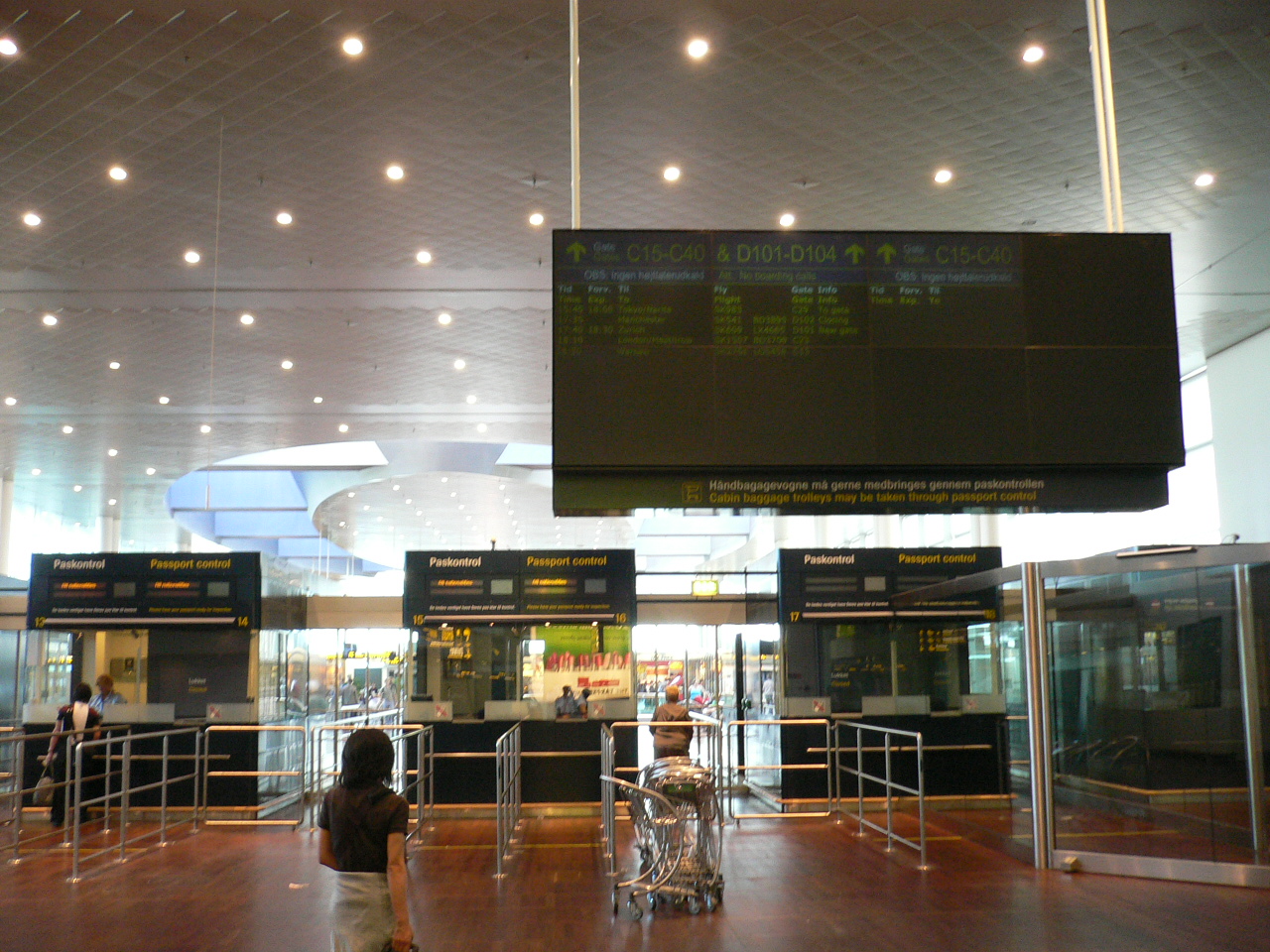
Italy's suspension of Schengen free movement with Spain is written to expire on 1 September. Spain's answering measure runs to midnight on 7 September. Both dates fall inside the next eight days, and between them they will settle a question that a month of argument did not: whether a temporary border control in Europe still means a temporary border control.
The measures were never about volume. Italy's Interior Ministry, chaired by Matteo Piantedosi and acting on assessments from the country's Committee for Migration Analysis and Border Security, reintroduced targeted air and sea checks on travellers arriving from Spain from 1 August, citing risks to public order and the prospect of secondary movements of third-country nationals after the Ceuta crossings. EU citizens were never affected. Spain's Interior Ministry responded on 8 August with passport, nationality and visa checks on arrivals from Italy, citing persistent irregular migration pressure on Italy — a mirror-image justification aimed squarely back at Rome. On the first weekend, Spanish officers inspected twelve of roughly 260 flights arriving from Italy.
The Italy–Spain spat is the visible part of a much older problem. On 2 June 2026 the European Commission issued formal opinions on the temporary reintroduction of internal border controls by nine states: Austria, Denmark, France, Germany, Italy, the Netherlands, Norway, Slovenia and Sweden. The opinions recommended that all nine work towards gradually phasing the controls out. Several of them have been running checks not for months but for years, well past the twelve-month ceiling the Schengen framework sets for this kind of derogation.
Two days later, at the Justice and Home Affairs Council in Luxembourg, Home Affairs and Migration Commissioner Magnus Brunner put it directly: "The time has come to phase out internal border controls, because the proper functioning of the Schengen Area is one of the European Union's greatest achievements."
The room did not agree. German Interior Minister Alexander Dobrindt replied that "internal border controls are working and will be further developed in a flexible manner, depending on the effectiveness of other decisions," adding that they "remain an important tool for combating illegal immigration." Austria's Gerhard Karner pointed to a collapse in irregular entries — from 3,500 in 2002 to fewer than twenty in the week before he spoke — as evidence the controls should stay. Sweden's Gunnar Strömmer was the most candid: his country has run internal checks for a decade, he does not want them permanent, and he wants Sweden safe. Three governments, three different arguments, one outcome.
A derogation that is renewed indefinitely is not a derogation. That is the mechanism by which internal controls have quietly become a standing feature of the Schengen area rather than an emergency response to one, and it is why the Commission's June opinions matter less than what happens on the ground in the next eight days. Rome and Madrid both attached hard end dates to measures adopted in visible anger. If those dates hold, the exception behaves like an exception. If either is rolled over — and rolling over is the well-worn path — the Italy–Spain episode joins the permanent furniture.
There is a reason to think they might hold this time. The trigger has partly dissolved. The second mass crossing into Ceuta that was widely expected on 15 August did not happen, after Moroccan Interior Ministry reinforcements at the frontier. And on 25 August Spain's Council of Ministers approved at first reading a new Asylum Law and a reform of the Ley de Extranjería, importing the Migration and Asylum Pact's screening procedure and twelve-week border procedure into Spanish law against a status quo in which cases took two to three years. Madrid's answer to Ceuta is now a legislative one, which weakens the case for Rome's answer being a border one.
The July figures themselves remain contested, and it is worth saying so plainly: estimates of how many people entered range from more than 72,000 to around 60,000, and the death toll has been put at 57, at roughly 80, and — by Ceuta's mayor Juan Jesús Vivas — at at least 100. There is still no consolidated official count.
The economic argument against internal checks has never been the one that moves interior ministries, but it is the one that does not go away. Research repeatedly cited in EU competitiveness work puts the cost of an incomplete single market at roughly €840 per citizen per year, or about €427 billion, with wider modelling suggesting 8 to 9 per cent of EU GDP is left on the table. Border friction is one of the mechanisms by which that number stays large. Every internal control also lands on the same trade corridors the EU is simultaneously trying to deepen, which is the tension the Commission's own 2026 Annual Single Market and Competitiveness Report was written to name.
Watch the first week of September rather than the communiqués. Brussels has made its position clear, in writing, to nine governments, and been told no by at least two of them. The Commission has no fast instrument to force a member state to reopen a border it has decided to police, which is precisely why the Italy–Spain dates carry weight beyond the route they cover: they are the nearest available evidence on whether the twelve-month rule still shapes behaviour, or whether it has become a formality that capitals notify and then ignore. If Italy's checks lapse on Tuesday and Spain's on the Monday after, Schengen has survived a bilateral quarrel between two founding members with its clock intact. If they do not, the more honest description of Europe's internal borders is that nine states run controls, two more have just joined them, and nobody has a mechanism for taking any of it back.


