The International Space Summit that closed in Paris on Wednesday was built to show that Europe can act as one buyer in orbit. It produced a long list of contracts, a clear political programme from the French president and the Commission president, and one awkward fact: the three governments whose money would make a "European preference" real were not in the room.
More than 90 countries were represented over the two days of 9 and 10 September, at an event France co-organised with Germany. Berlin sent its research and space minister, Dorothee Bär, rather than the chancellor. The Élysée listed more than 50 business agreements; the total value reported in Brussels is around EUR 20bn.
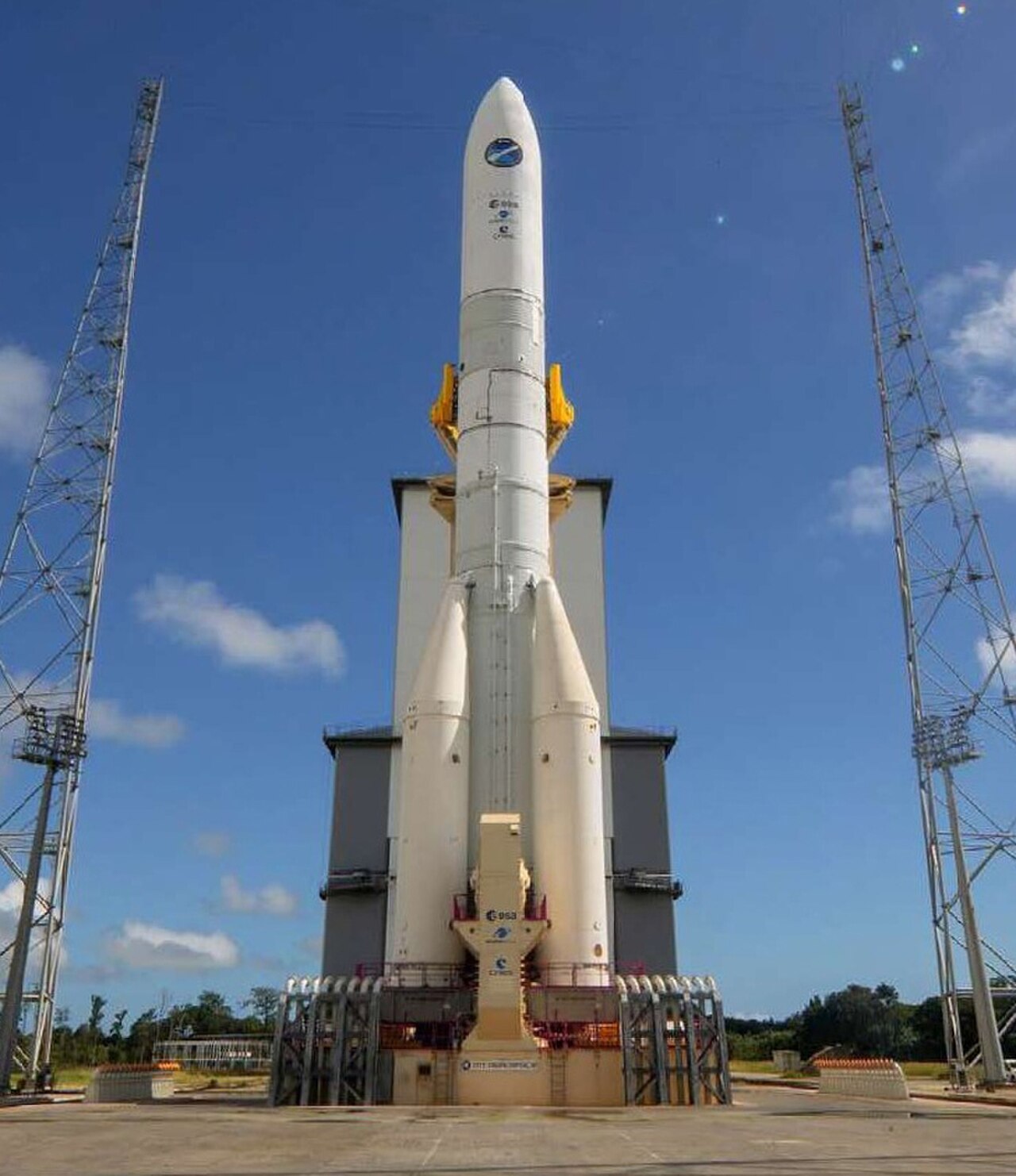
The largest single item was commercial. Amazon chose Ariane 6 as a launcher for its low-Earth-orbit constellation, a rare win for the European rocket against a US market SpaceX dominates. The IRIS² secure-communications constellation, budgeted at EUR 15.6bn and now planned at more than 350 satellites, awarded satellite-building contracts to Belgium's Aerospacelab and to a joint venture of Thales and Leonardo. The European Space Agency signed its first cargo agreement with a European capsule, built by Munich's The Exploration Company.
Von der Leyen fixed the first IRIS² launches for 2029. "Our security on Earth increasingly depends on our security in space," she said. "In a crisis, Europe must have connectivity and communications on our own terms."
France and Sweden, the only two EU states with operational launch sites at Kourou and Esrange, agreed to draw up a joint civil and defence roadmap. "By combining our expertise and infrastructure, we can strengthen Europe's independent access to space," Swedish defence minister Pål Jonson said.
Macron's programme had three parts, and all three are about how public money is spent rather than how much.
The first is "European preference": reserving the entire European institutional market, meaning ESA, EU and national government contracts, for companies from the continent. "European space remains fragile and we need to accelerate," he said, urging Europeans to "refuse naivety".
The second is bulk buying. Macron suggested the Commission, ESA and national agencies should book dozens of launches together instead of one at a time, copying the way US agencies underwrite their launch providers. That is the model that gave SpaceX its scale.
The third is the end of what he called "the rigid model of geo-return", the ESA rule that hands contracts to member states in proportion to what they pay in. Geo-return keeps every contributor happy and every programme slow.
Von der Leyen added a fourth. She gave open support to the plan to fold the space businesses of Airbus, Thales and Leonardo into one company, currently in talks with the Commission before a formal antitrust filing. "These are the types of industrial champions we need if Europe is to lead in the space economy of tomorrow," she said.
Merz, Meloni and Sánchez all skipped the summit. SpaceX cancelled and there was no major US corporate presence after the White House signalled it saw the event as too pro-European.
The German absence is the one that counts. Germany co-hosted the summit on paper but is the member state least willing to shut the door on SpaceX for its own launches, and it is building a separate military satellite network of around 100 units rather than folding that need into IRIS². A European preference rule only works if the biggest buyers apply it, and after France, Germany is the biggest buyer.
Timing matters too. Macron convened the summit with less than a year left in office. The Commission's own space act, the merger review and the next ESA budget round will all be decided after he has gone.
Of everything Europe has been told it must do to compete, a space preference is one of the few that needs no treaty change, no new EU law and no new money. It only needs the agencies and ministries that already buy rockets and satellites to award them differently. That makes it a test of will rather than capacity, which is exactly why the empty chairs in Paris are the story. The contracts signed this week show European industry can deliver when someone orders. Whether Berlin, Rome and Madrid are prepared to order European first, at a higher price, is the question the summit was designed to answer and could not.


.png)

.png)