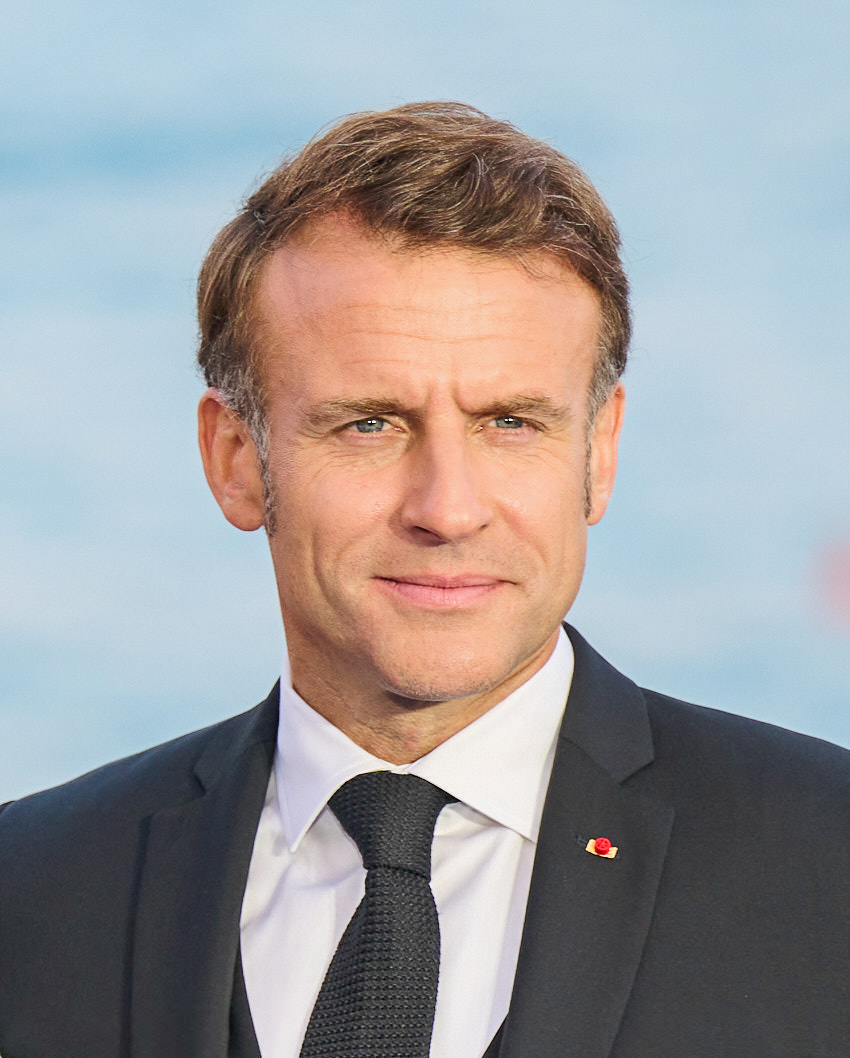
Emmanuel Macron has told France to prepare for a Russian attack it will not see coming. "The day we are physically attacked, we will not be warned," the French president said on 18 September after an unusual session in the Élysée's crisis room, where the leaders of France's main parties and the candidates hoping to replace him next spring were briefed by the heads of the intelligence services and the director-general for energy. His conclusion was blunt: "Russian hybrid attacks will not go unanswered."
The president said the threat facing France and Europe, "particularly the Russian hybrid threat", had intensified in recent weeks. He asked the government to draw up a plan to protect the country's most sensitive critical infrastructure and its industrial and defence base against drone and cyber attacks, and announced a heightened national security posture. Prime Minister Sébastien Lecornu convened a government seminar on Monday to start turning that into measures.
Macron gave no detail on how France would respond to an attack. "The very nature of deterrence is not to give visibility to what we will do," he said. He was specific about the provocation, though: the drone attack on Leipzig airport in Germany "would have had tragic consequences had it not failed", and he accused the GRU, Russia's military intelligence service, of having planned a lethal strike. Berlin has already attributed the Leipzig and Halle plots to Russian intelligence. Add the drone that hit a train near Kyiv, the Russian frigate that fired flares at a Danish helicopter off Gedser, and the Italian NATO jets that downed a drone over Lithuania, and the pattern Macron described to his guests is not hypothetical.
The energy half of the briefing was just as pointed. With the Strait of Hormuz "almost blocked" and Saudi Arabia's Yanbu pipeline hit, France is ready to join a tanker-escort mission with the International Maritime Organization. At home, diesel has reached €2.39 a litre and the government is paying €100 to heavy road users. Macron also raised Red Sea shipping with Donald Trump in New York, where Houthi activity around the Bab al-Mandab Strait has disrupted traffic.
Macron is not alone. Poland's Donald Tusk has been making the same case for months, and the two have become the loudest voices in Europe arguing that Vladimir Putin is preparing a dangerous move against the EU itself. But the response across the continent is uneven. Several governments have reacted as if the threat were none of their business, falling back on the reflex that NATO is there to protect them.
That reflex is being tested from two directions. Washington is planning to withdraw close to a third of the American troops deployed in Europe, and the Trump administration's commitment to Article 5 is no longer taken for granted in European capitals. One reading circulating among defence analysts is that the window for Putin to test the alliance opens in the first half of 2027, when US disengagement and a cluster of European elections — France's among them — coincide. Whether Europeans could cope without American support, what state their arsenals are in, and how their voters would react are questions European leaders have mostly avoided asking out loud. Macron's Friday session was a deliberate attempt to force them onto the table in France, six months before a presidential election.
Brussels is moving too, if more quietly. EU ambassadors are due to discuss hybrid threats this week, and Ursula von der Leyen's State of the Union proposal for a European Security Council — a leaders' format that would bring in Britain, Norway, Ukraine and Canada — is explicitly built for exactly this kind of below-the-threshold aggression. European defence ministers meet on 28 September.
Macron carried the message to New York. On the sidelines of the UN General Assembly he pressed Trump to speed up deliveries of defensive weapons to Ukraine, and said afterwards that the US president had been "very amenable" to his request for faster shipments of missile interceptors. He is expected to meet Volodymyr Zelensky during the trip. The logic is the one Paris has repeated since 2022: the cheapest place to blunt a Russian threat to Europe is still in Ukraine.
France is asking for a war footing from a weak fiscal position. The finance ministry expects public debt to reach 119.3% of GDP this year, the highest since 1978, with a deficit of 5.4%, and projects 121.7% in 2027 even after €54 billion of savings. Fitch puts the 2027 deficit at 5.5%. France is under the EU's excessive-deficit monitoring, and every euro for infrastructure protection, interceptors or a tanker escort competes with the fuel subsidies a nervous government is handing out in the same week.
The substance of Macron's announcement — a protection plan, a harder tone, no detail on retaliation — is modest. The form is not. A French president briefing his political rivals on classified intelligence half a year before an election is telling voters the threat outlasts him, and telling Europe that hybrid war is now a domestic-politics issue rather than a NATO briefing slide. The test is whether other capitals follow. If they do, the 28 September defence ministers' meeting and the Security Council debate become the moment Europe starts planning for a Russian attack on its own soil without assuming Washington picks up the phone. If they don't, Paris and Warsaw will keep sounding an alarm that the rest of the continent has decided not to hear — and Putin will have his answer about the alliance's weakest point before he ever tests it.