

Three of Europe's most consequential nationalist forces spent the same Tuesday fighting for their futures. In Paris, Marine Le Pen turned a damaging court ruling into a campaign launch. In London, Nigel Farage torched his own seat in parliament to stage a comeback. And in Brussels, the European Parliament opened a process that could cut off the money keeping the AfD's European party alive. Each story has its own logic. Together they capture a movement that is simultaneously ascendant at the ballot box and increasingly entangled with the courts, watchdogs and institutions it has spent years attacking.
A French appeals court handed Le Pen a ruling that was punishing and liberating at once. It upheld her conviction for misusing public funds — the long-running case over European Parliament assistants paid to do party work — but cut the accompanying ban on holding office to 45 months, with 30 of those suspended. The practical effect: the barrier that threatened to keep her out of the 2027 presidential race has been lowered enough for her to run.
The catch is how she would have to campaign. The sentence requires her to wear an electronic ankle tag for a year, and France's home-detention rules mean a magistrate must approve when a monitored person can leave the house — an almost impossible way to run a national campaign. Le Pen has flatly refused to wear it. She is taking the ruling to the Cour de cassation, France's highest court, and argues that until it rules she is not obliged to wear the tag. That gives her a window to campaign unencumbered, with the threat of restriction hanging over the back half of the race.
She wasted no time using it. In a television interview she said she and Jordan Bardella, her protégé and the National Rally's party president, would "very quickly start this presidential campaign," framing the pair as a "duo" who would win over voters together. It is a calculated message: even if the courts eventually clip Le Pen's freedom of movement, the movement has a second candidate ready to carry the same banner.
Across the Channel, Nigel Farage did the opposite of clinging on. The Reform UK leader resigned as MP for Clacton after The Sunday Times reported that he had failed to declare benefits provided by George Cottrell, a convicted fraudster — including staff paid to run Farage's social media before the 2024 election and the use of a Georgian townhouse near Buckingham Palace. Facing a standards investigation, Farage chose to force the question rather than wait for a verdict.
By quitting, he triggers a by-election in his own seat, which he intends to contest. He has cast it as "a people vs the establishment by-election" and said "the people of Clacton should be the judges of my actions." The framing is pure Farage: convert an ethics problem into a referendum on the political class. The other parties are, so far, obliging him. Labour, the Conservatives, the Liberal Democrats and the hard-right Restore Britain have all said they will not field candidates — a decision that hands Farage an easy route back to Westminster while denying him the establishment foil he clearly wants.
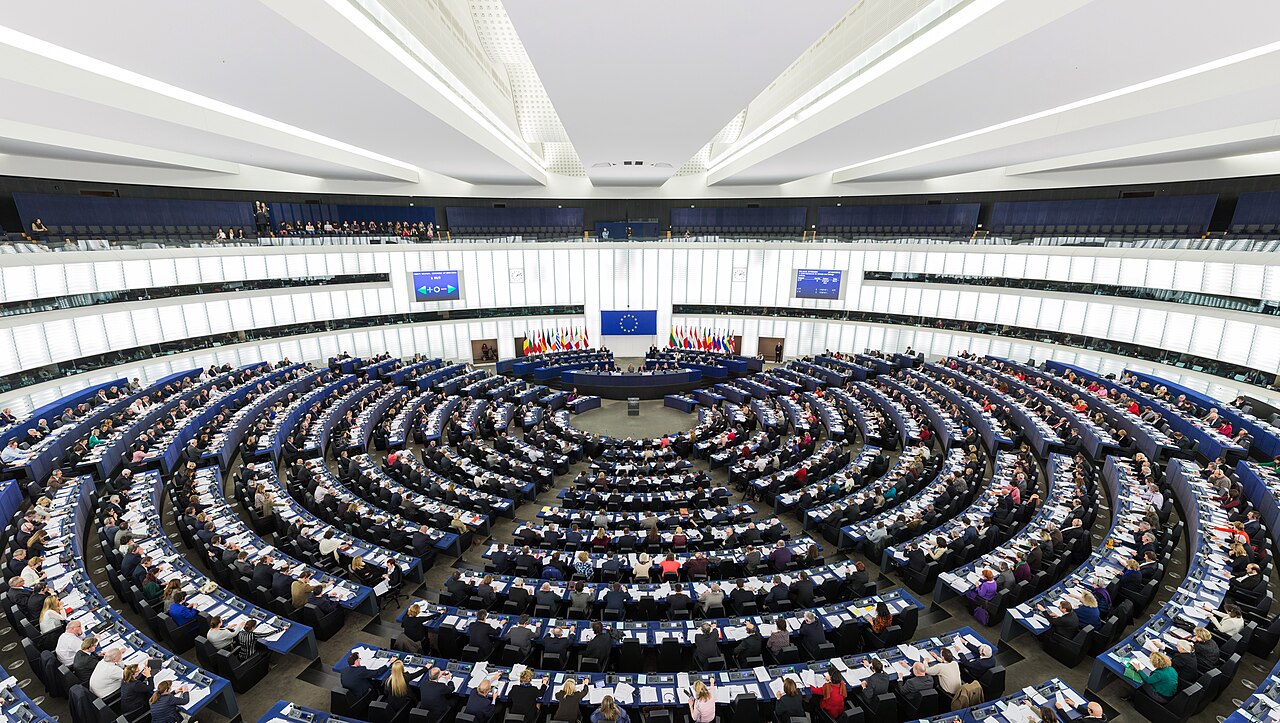
The third front is institutional rather than electoral. The European Parliament voted 414 to 224, with 18 abstentions, to trigger a verification procedure against Europe of Sovereign Nations — the European political party that houses Germany's AfD, led at EU level by figures around Alice Weidel, alongside smaller nationalist parties from other member states. The vote tasks the Authority for European Political Parties and European Political Foundations with investigating whether the party respects the EU's founding values. If it fails that test, it can be stripped of its status as a recognised European party and lose the public funding that comes with it.
The move split the Parliament along familiar lines. The mainstream groups backed it; the European Conservatives and Reformists and the Patriots for Europe — the larger nationalist bloc that includes the National Rally — opposed it. It is worth being precise about the target: the procedure goes after the party organisation and its money, not the MEPs or their parliamentary group, who keep their seats and votes regardless. But money and legitimacy are not nothing, and opponents were quick to argue that a handful of officials should not get to weigh the standing of a party backed by millions of voters.
The through-line is friction between electoral strength and institutional exposure. Le Pen, Farage and the AfD are all polling or performing well, yet all three spent Tuesday managing legal jeopardy, ethics scandals or the threat of defunding. That is the paradox of Europe's national-populist wave in 2026: it is close enough to power to be treated as a genuine threat by courts, watchdogs and parliaments, and that very treatment feeds its core narrative of a self-serving establishment closing ranks. Each of these fights will be litigated as much in public opinion as in any courtroom. For Europe's mainstream, the hard question is whether using institutional tools against these movements contains them or validates them — and the answer may differ in Paris, London and Brussels. What is no longer in doubt is that the far right is now a permanent, organised feature of European politics, powerful enough to force the establishment to decide how far it is willing to go to stop it.


