

Europe's political leaders and Europe's intelligence services spent the weekend saying different things about the same country, and both of them were right.
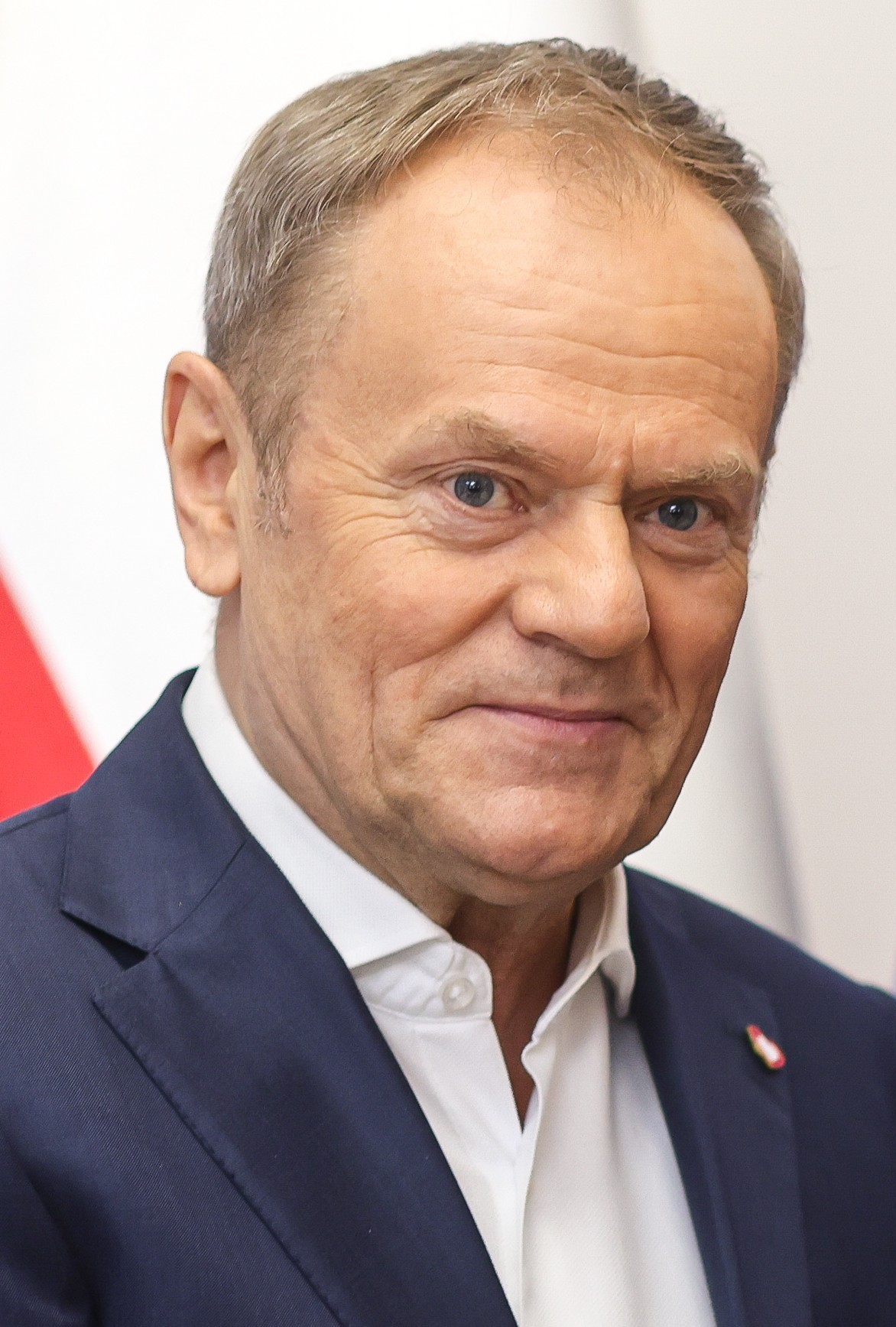
On Saturday, after a call with NATO Secretary General Mark Rutte, Polish Prime Minister Donald Tusk wrote that escalation by Russia is proceeding, that the next six months will be decisive, that Poland and NATO must be prepared for various scenarios, and that provocations by Russia against one of NATO's members cannot be excluded. He had said two days earlier that there were signs Russia was seriously preparing to escalate, and that the next seven to eight months could be critical for the security of Ukraine, Poland and the wider region.
Rutte's own language has hardened to match. Any attack on Poland or another ally, he said, would meet the full force of the alliance, and the reaction would be devastating. The Kremlin called it irresponsible to talk of war with Russia.
Officials briefed on the analytical work tell a calmer story. European intelligence services, on their reading, do not see a risk of a Russian attack on European countries in the near term. What they see instead is a continuing campaign of hybrid and semi-hybrid pressure that they expect to go on, and a Russia actively working to create difficulties for European governments. Crucially, they say they are not looking at readiness assessments pointing towards an attack on a NATO member. Russian mobilisation is being watched closely, because it is the variable that could change that judgement.
This is not a contradiction so much as a division of labour, and it is worth being precise about it. A prime minister speaks in the register of deterrence, where the job is to state the worst case credibly enough that it does not happen, and where the cost of under-warning is far higher than the cost of over-warning. An intelligence service speaks in the register of indicators, where the job is to say what the evidence currently supports. Tusk is describing a risk Poland has to insure against. The services are describing what they can presently see. Both statements can be accurate and still leave Europe without an answer to the thing that is actually happening.
Because the pressure is real, and it does not look like an invasion.
In early August, three drones were found at Leipzig airport in Germany, close enough to cause serious damage. Berlin is reported to be preparing to attribute the incident to Russia and to press for a tough EU sanctions package on the back of it.
On 27 August, the Dominican-flagged cargo ship Progress IV caught fire and sank in Romania's exclusive economic zone in the Black Sea, roughly fifteen miles from EU shores, while sailing from the Ukrainian Danube port of Reni to Turkey. All twelve crew — eight Ukrainians and four Azerbaijanis — were rescued. Romania's acting Defence Minister Radu Miruță said the vessel had reported through an alert system that it was struck by a drone. President Nicușor Dan confirmed the ship had been hit but said responsibility had not been established, an investigation would follow, and speculation was unhelpful. A week earlier, Romanian forces had shot down a drone near the Neptun Deep gas project offshore.
Alongside that: Russia has warned European governments against transferring missile technology to Ukraine, NATO has been running an exercise on its eastern flank, and CIA director John Ratcliffe travelled to Moscow on 23 August, a trip that raised nerves in several European capitals rather than settling them.
None of this is Article 5. A burning merchant ship in an exclusive economic zone, with attribution pending, is precisely the kind of event Europe's decision-making machinery is worst equipped to handle. It is also the kind of event that keeps happening.
EU defence ministers meet informally in Wicklow, Ireland, today and tomorrow, the first such gathering since the summer break. High Representative Kaja Kallas is expected to press member states that have not done enough on Ukraine's air defences, at a point where Russia is exploiting Kyiv's shortage of Patriot interceptors to sustain heavy ballistic missile strikes. On Saturday, 37 people were killed in a Russian missile attack on an ammunition depot in a village in the Kyiv region. The civilian casualty rate in July ran 70 per cent above July of the previous year.
Kallas's assessment, as relayed by European officials, is that one group of countries has done a great deal and another group has not, and that the second group is the point of the meeting. She also intends to open a conversation with South Korea and Japan about transferring air defence systems and interceptors — a tacit acknowledgement that Europe cannot manufacture its way out of the shortfall on the timescale that matters.
Three other files are on the Dublin agenda: space, where no member state can act alone; Lebanon, where the EU will launch its own Common Security and Defence Policy mission once UNIFIL's mandate expires, built around strengthening Lebanese armed and security forces rather than replicating a peacekeeping force; and maritime security, including protection of critical undersea infrastructure and action against Russia's shadow fleet. Ireland, which holds the Council presidency and is hosting, has a particular interest in the last of those after a run of incidents in its waters.
EU foreign ministers gather in Copenhagen on Tuesday and Wednesday for their informal Gymnich, and the frozen assets question returns with them. On 27 August the foreign ministers of Sweden, Poland, the Netherlands and Spain wrote calling for new options to be explored for the more than €200 billion in Russian assets immobilised under the 2022 sanctions, arguing that using them is both an important tool for strengthening support for Ukraine and a powerful means of increasing pressure on Russia. To meet Belgian objections, the four proposed mutualising the risks of any such operation.
Belgium is not moving. Most of the assets sit with Euroclear in Brussels, and Bart De Wever's government killed the reparations loan idea last year over legal and financial exposure. Defence Minister Theo Francken told Flemish broadcaster VRT on Friday that the matter is non-negotiable and the door is closed.
Europe is being asked to plan for two different Russias at once: the one its leaders must deter, and the one its analysts can currently see. The gap between them is not the problem. The problem is that neither framing produces an answer to the war Russia is actually running, which consists of things nobody claims — a ship that burns, drones on an apron, a cable that parts — each individually deniable and cumulatively expensive.
This week's two meetings are the test, and they are the same test twice. Dublin is about hardware Europe does not have enough of and is now asking Seoul and Tokyo to supply. Copenhagen is about the €200 billion that would pay for it and that one member state will not release. Europe has reached a settled view of the threat. It has not reached one on the bill.




.png)


