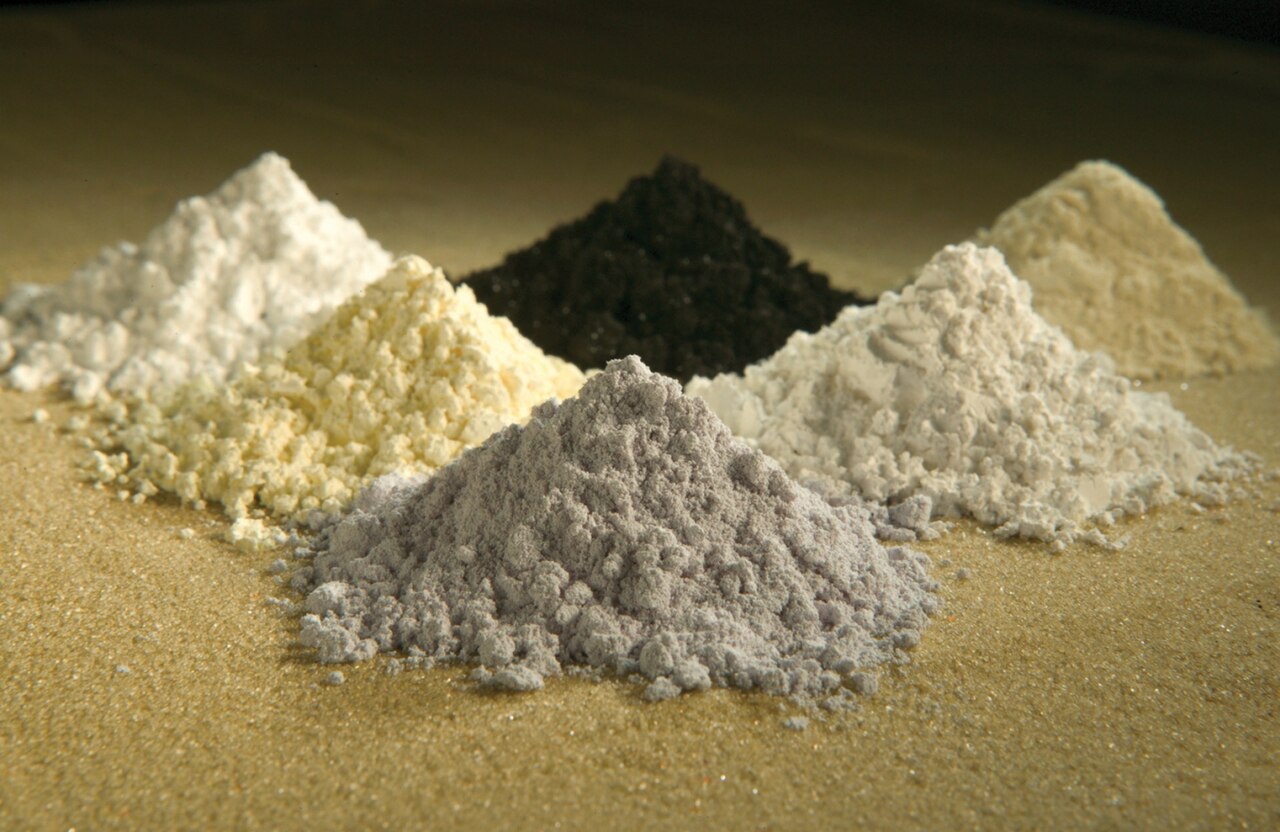
A price move in erbium is not the sort of thing that usually reaches a front page. Erbium goes into optical fibre amplifiers, lasers and specialist alloys. Almost nobody outside the industry could name a company that buys it. It jumped this week anyway, on the strength of a threat rather than an event — and that is the clearest illustration yet of where Europe now sits in the critical raw materials chain.
The threat has a date attached. China's export-control reprieve, granted after the trade truce of late 2025, runs out on 10 November 2026. Between now and then, European industry is buying on a clock.
The important shift happened in November 2025, and it was widely underestimated at the time. Beijing's earlier restrictions targeted the volume of material leaving the country. The 2025 package went after the machinery: centrifuges, vacuum furnaces and separation systems — the equipment needed to turn ore into usable oxides and then into magnets.
That is a different kind of leverage. Restricting material creates a shortage a buyer can eventually engineer around. Restricting the equipment that makes the material usable slows down every attempt to build an alternative supply chain, everywhere, at once. China controls roughly 90 per cent of global rare-earth processing capacity. The controls are designed to keep it that way.
The bottlenecks show up in exactly the elements you would expect: holmium, erbium, thulium, europium and ytterbium — the heavy end of the table, where substitution is hardest and Chinese dominance is close to total. China's official rare-earth price index hit 273.5 on 16 July, with the heavies driving the increase.
Two numbers capture the position European buyers are in. Licence approval rates for European firms have run below 25 per cent, meaning most applications to import restricted material simply do not clear. And where material is available outside China, it has traded at up to six times the price inside China.
That second figure is the one that should worry policymakers most, because it is not a supply problem. It is a competitiveness problem. A European magnet maker paying six times what a Chinese competitor pays for the same input is not going to win on cost, however much capacity Europe eventually builds. Price spikes of up to sixfold have already hit some materials over the past year.
The exposure runs through defence, wind turbines, electric vehicles and the entire electrification agenda European industrial policy is built on. It is why the rare-earths file keeps surfacing in negotiations that are ostensibly about something else.
The European Commission has not been idle. The RESourceEU Action Plan, adopted on 3 December 2025, committed up to €3 billion for 2026 and regulatory fast-tracking for a sub-group of 60 strategic projects already designated under the Critical Raw Materials Act. Those 60 need roughly €2.15 billion in capital and operating costs to reach production in the near term.
Alongside it sits the bloc's first coordinated stockpile. Tungsten, rare earths and gallium have been shortlisted, with planning run through working groups across ten member states led by Italy, France and Germany. A pilot scheme was targeted to be operational in early 2026.
The Commission has also sharpened its defensive tools: Chinese entities are excluded from raw-materials calls under Horizon Europe, the foreign direct investment screening regulation is being applied to investments in European raw-materials projects, and Brussels has signalled more assertive use of anti-dumping and anti-subsidy investigations to protect emerging European producers from targeted price manipulation.
The Critical Raw Materials Act sets the benchmarks these instruments are meant to hit by 2030: 10 per cent of annual consumption extracted in the EU, 40 per cent processed, 25 per cent from recycling, and no more than 65 per cent of any strategic raw material sourced from a single third country. On processing — the binding constraint — Europe is starting close to zero.
This is where the file gets uncomfortable. Permitting, financing and commissioning a separation plant is a multi-year undertaking even with fast-tracking. The Commission's own timeline for the 60 priority projects is framed in terms of the very short term, which in mining means years, not months.
The November deadline is in weeks. If the reprieve is not extended, the gap between when Europe needs material and when Europe can make its own is filled by exactly one thing: whatever price China chooses to charge, to whoever it chooses to license.
Europe's rare-earths position is a case study in the difference between having a policy and having capacity. The Critical Raw Materials Act set the right targets, RESourceEU put money behind them, and the stockpile is a sensible hedge. None of that changes the arithmetic before 10 November. The realistic outcomes are an extension of the reprieve, negotiated as part of a wider trade settlement, or a scramble in which European manufacturers pay a multiple of their Asian competitors for inputs they cannot substitute. Watch two things between now and the autumn: whether the pilot stockpile is actually holding material rather than holding meetings, and whether rare earths appear as a standalone item in the EU-China talks or stay buried as a bargaining chip in a broader package. The first tells you how seriously Brussels is treating the deadline. The second tells you how much leverage it thinks it has.