

Europe finally has the invitation it has been lobbying for. It still has no name to write on it.
Steve Witkoff and Jared Kushner, Donald Trump's peace envoys, flew from a meeting with Vladimir Putin in Moscow to Dublin on Thursday night. On a refuelling stop at an airfield outside the Irish capital they briefed Volodymyr Zelenskyy and senior security officials from Germany, France, Italy, Poland, Ireland and the EU. Their message: Europe will be in the room next time. "We cannot conclude this deal without the Europeans being at the table," Kushner said. Witkoff said Putin had agreed that Europeans could join the next round of multilateral talks. Moscow sounded less keen.
That puts the question straight onto the table of today's informal summit of EU leaders, which follows Thursday's gathering of the European Political Community. The meeting was meant to be about artificial intelligence, with Mistral chief executive Arthur Mensch briefing leaders. Giorgia Meloni's letter to European Council President António Costa earlier this week turned it into another round on Ukraine.
Only a day earlier, after two days of US-brokered talks in Abu Dhabi, Kushner had said European participation would depend on Putin's "blessing". The EU, France, Germany, Italy and the UK all sent delegations to the Gulf. All five were kept out of the main room, where American, Russian and Ukrainian negotiators met. The talks produced a large prisoner exchange and little else.
Kushner also put the problem bluntly. If Europe could pick one person to speak for it, he said, that would be a bigger achievement than persuading Russia to let it in. Roughly €300bn in support from the EU, the UK and Norway since 2022 has not yet bought a single, agreed European voice.
Leaders broadly fall into three groups. France and Germany want the E3, the two of them plus the UK, to remain the main channel. Italy and several smaller member states want Costa, who has a treaty mandate to represent the Union, to take the seat. A third group wants a new arrangement: one envoy or a small delegation chosen for the job.
Emmanuel Macron arrived in Dublin arguing that the substance has to come before the format. Friedrich Merz said Europe is already represented through the E3 and saw no reason to change that. Costa himself called it a "team effort", in which different leaders could speak for Europe depending on the topic, and denied any division. EU officials played down hopes of a formal conclusion today, aiming at best for a shared understanding.
There is an awkward institutional wrinkle too. Leaders agreed in June that EU institutions would speak for the bloc on EU matters such as sanctions, aid and reconstruction. High Representative Kaja Kallas reminded colleagues of that in Dublin. Yet since August it has been Ursula von der Leyen's chief of staff, Björn Seibert, who has represented the EU in meetings with Witkoff and Kushner. And the Commission, not the Council, controls most of the levers likely to come up in any settlement.
The countries most exposed to Russia, the Nordics and the eastern flank, have no seat in any of the current formats. Lithuania, which takes over the rotating Council presidency in January, is already positioning itself. Its finance minister, Taurimas Valys, said the war could end this winter and that Vilnius knows Moscow well enough to help.
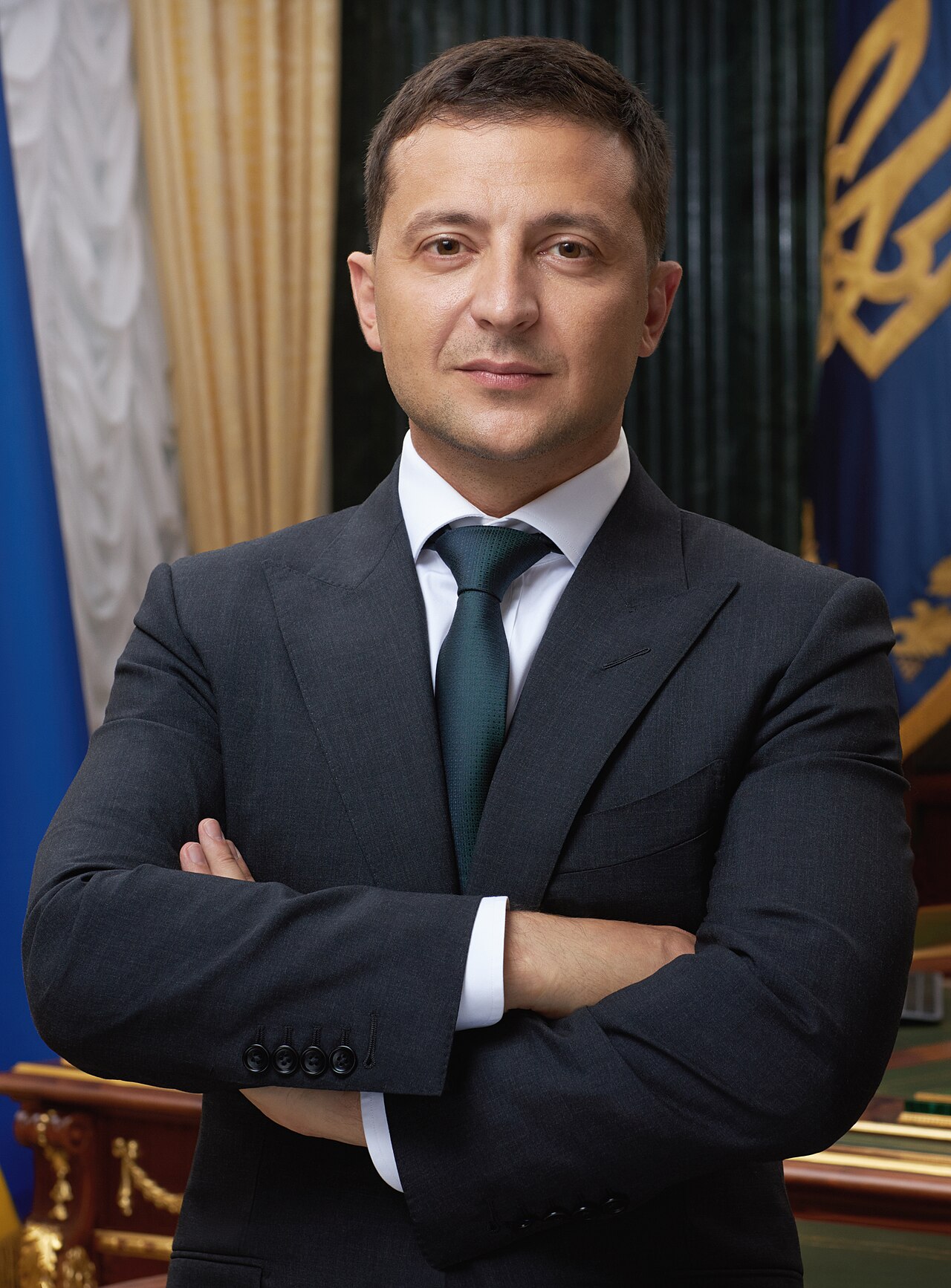
Zelenskyy wants Europe at the table and has urged leaders to choose a representative by the end of November. But his sharpest message in Dublin was a warning. When Americans and Russians talk about security guarantees, he told leaders, "it's not just about Ukraine; in fact, it's more about some kind of new security framework between Europe and Russia." Europe, he said, "really needs to pay attention."
That is the trap many diplomats fear. Putin has demanded a discussion of Europe's wider security architecture before any ceasefire. For Moscow, that conversation is a route to an old goal: pushing NATO back towards its posture before the former Warsaw Pact states joined. Several leaders rejected the idea outright on Thursday. Others argue it is better to be inside that conversation than to have it held about them. Kushner tried to reassure both camps, saying no broader European security arrangement would be finalised without dealing with Ukraine's own security concerns.
Zelenskyy also said Ukraine had again detected speed restrictions on Starlink in occupied parts of the country, a reminder of how much of Kyiv's war effort still runs on American decisions. Costa and NATO Secretary General Mark Rutte both said the real test remains whether Russia wants peace at all. Its losses are mounting: an FT analysis of leaked Russian statistical records puts Russian deaths since the full-scale invasion at more than 500,000.
Europe has spent nearly two years asking for a seat. Now that Washington is offering one, the obstacle is Europe itself. Every week without a name gives Moscow room to play capitals off against each other and to steer the agenda towards the security-architecture talks it wants. Watch for whether today's Dublin meeting produces even an informal understanding, and whether leaders meet Zelenskyy's end-of-November deadline. If they do not, the next round may start with Europe invited and still absent.


