

Europe has spent 2026 proving it can rearm. It has spent far less time agreeing on what all the new hardware, exercises and command structures are ultimately for. That gap — between capability and purpose — is now the most important argument in European defence, and the displays of unity on the training ground are papering over it.
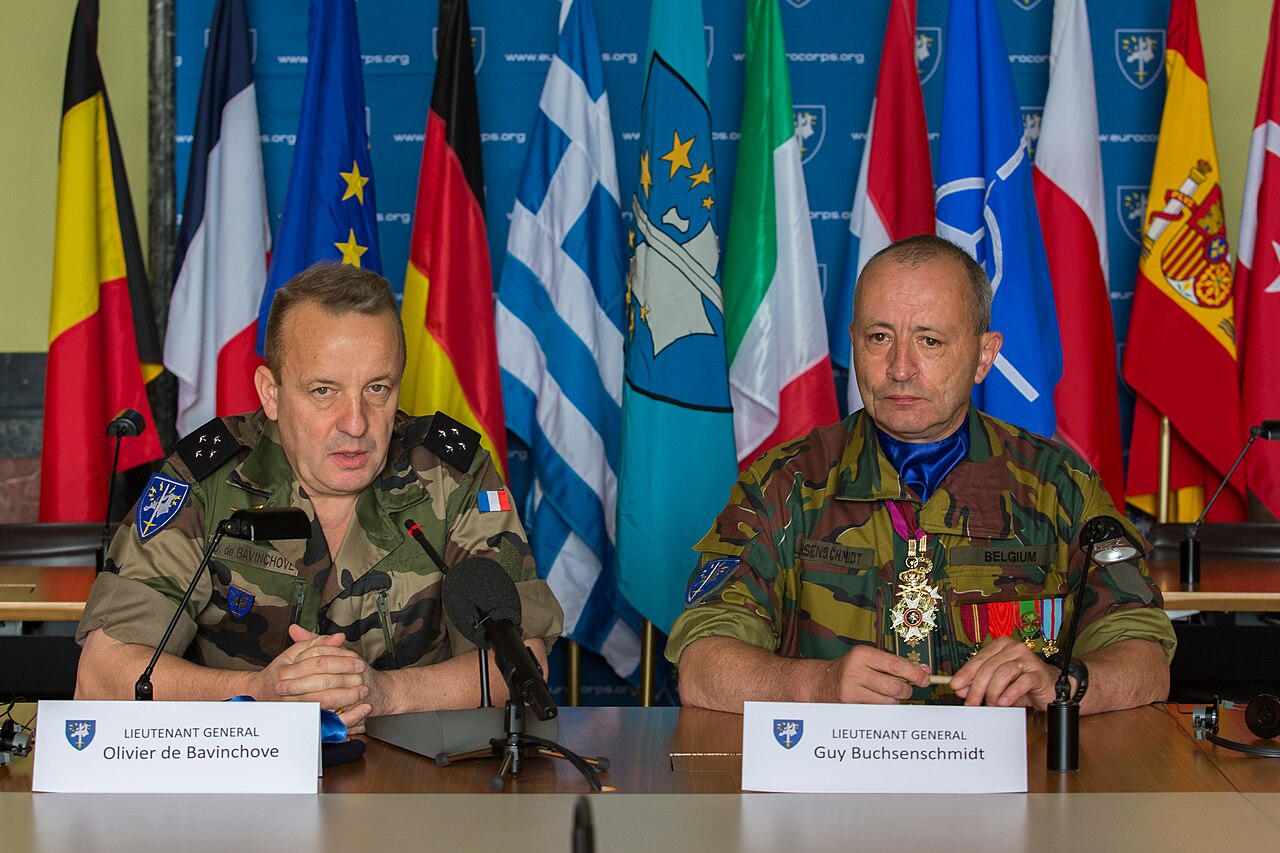
The evidence that Europe can act came this summer at the San Gregorio range near Zaragoza, where the EU ran MILEX26, the largest live military exercise it has ever staged. Around 2,500 troops from 13 member states, more than 1,600 of them Spanish, rehearsed deploying into a simulated crisis in Africa. The point was not the scenario but the plumbing: the exercise wired together the EU's Military Planning and Conduct Capability as the operational headquarters, Eurocorps as the force headquarters, and a Spanish-led EU Battlegroup as the core force. It ended by certifying that battlegroup for standby duty in the EU's Rapid Deployment Capacity from July 2026 to June 2027 — a force of up to 5,000 that is supposed to be ready to move on short notice.
MILEX26 answered the narrow question — yes, Europe can field a multinational force under an EU flag and command it without the United States. It left the bigger one open. The EU is building institutions designed for crisis response and expeditionary missions at exactly the moment its members are pouring money into territorial defence against Russia, a mission that runs through NATO. The rapid-reaction force is real, but it is small, and no one can yet say whether it is the seed of a European army or an expensive rehearsal that duplicates what the alliance already does better.
Underneath the institutional puzzle sits a change in how wars are actually fought — and here the argument is being led by Thierry Breton, the former European commissioner for the internal market. In a widely circulated essay, Breton argues that Ukraine has killed the model of the small, exquisitely equipped 'boutique army' that most Western states spent the post-Cold War decades building. Cheap drones produced by the million, and the data networks that direct them, now decide engagements that used to turn on a handful of expensive platforms. His conclusion is uncomfortable for European treasuries: mass matters again, and the edge belongs to whoever can churn out drones and process battlefield data at scale, not whoever owns the shiniest jets. That reframes the spending debate. Record defence budgets are necessary but not sufficient; how the money is spent — on volume, software and industrial capacity rather than prestige hardware — may matter more than the headline figure.
The most contested piece is political. Writing after Donald Trump's latest appearance at the NATO summit in Ankara, the historian Timothy Garton Ash argues that the real task is not building a separate EU army but the 'Europeanisation of NATO' — Europeans taking over the running of the alliance so it keeps working even as Washington's commitment wobbles. He sketches a 'dual-core' Europe, with France and the United Kingdom providing the nuclear and expeditionary muscle and Germany and Poland anchoring the conventional and industrial weight on the eastern flank. It is a pointed challenge to the Brussels project: if NATO is already becoming more European, an EU command structure risks splitting scarce forces and political attention across two headquarters instead of strengthening one. Advocates of the EU track counter that a bloc able to act alone is exactly the insurance Europe needs precisely because Trump has made American backing conditional.
Europe is converging on the easy part of strategic autonomy — more money, more exercises, more troops on standby — while the hard choices stay unmade. Is the goal an EU that can fight on its own, or a NATO that Europeans can run without the Americans? Should the next hundred billion go on drones and software or on tanks and jets? MILEX26 showed the continent can now put a force in the field. What it could not show is agreement on why. Until Europe's capitals settle what their new armies are for, the risk is not that Europe fails to rearm, but that it rearms twice over — once for Brussels, once for NATO — and ends up with duplication dressed up as ambition. The hardware is arriving faster than the doctrine to use it.


