Europe spent the first half of 2026 worrying about energy — another war in the Middle East, another spike in gas prices, another test of how exposed the continent still is. The summer's numbers offer an unexpectedly upbeat answer.
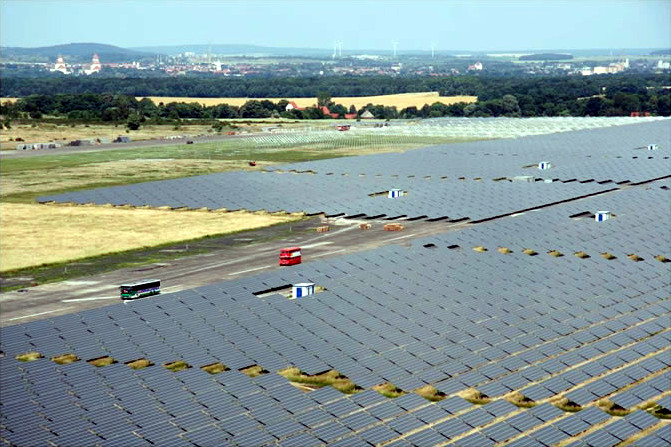
In June, solar became the EU's single largest source of electricity for the first time. According to analysis by the energy think tank Ember, solar panels generated a record 52 terawatt-hours across the bloc — 25% of all power — pushing past nuclear (21%), gas (15%), wind (14%), hydro (12%) and coal (8%). Germany, Spain and Poland led the surge.
One record month is not a transformation. But it is a marker: the cheapest new power source is now, at least in high summer, the biggest.
The strategic value showed up on the import bill. SolarPower Europe estimates that between 1 March and 15 July, solar generation spared the EU around €20 billion in gas it did not have to buy — roughly €146 million a day, more than France spends on defence over the same stretch. Every megawatt-hour from a domestic panel is one the bloc does not have to source from a volatile global market.
That is the argument renewables advocates have made for years. In a summer framed by war and price risk, it stopped being theoretical.
Wind told a similar story. France and Germany between them awarded more than 3 gigawatts of new onshore wind in their latest auction rounds, and both were swamped with bids. France awarded 0.8 GW against 2.4 GW of projects competing, with the average winning price falling to €77 per megawatt-hour. Germany awarded 2.5 GW against 6.4 GW of bids, at a volume-weighted average of just €50.60.
The industry's trade body, WindEurope, welcomed the results but issued a warning: auctions are too small and too unpredictable. Developers want bigger, more regular tenders and faster grid connections if Europe is to hit its electrification targets.
The biggest single commitment came from Brussels and Paris. The European Commission approved a €63 billion French scheme to support offshore wind, cleared under the Clean Industrial Deal state-aid framework. It will run for 25 years and back eleven wind farms in the North Sea, the Atlantic and the Mediterranean, with a combined capacity of up to 11.1 GW — enough, once built, to cover around a tenth of France's electricity demand. Support takes the form of a two-way contract for difference, which claws money back for the state when market prices run high.
The scorecard points one way: renewables are now both the cheapest and the most strategic power Europe can build. That changes the nature of the problem. The constraint is no longer whether clean generation can compete — June settled that — but whether the system around it can keep up.
Solar's record was set on long summer days; the harder test is the dark, still evenings when it produces nothing. That puts the spotlight on grids, storage and market design, not on panels and turbines. WindEurope's complaint about small, erratic auctions is the same point from the supply side: the generation is ready and cheap, but the plumbing — connections, permits, flexibility — is where Europe's energy transition now succeeds or stalls.