The Arctic has stopped being a climate file in Brussels. At the European Arctic Summit in Rovaniemi on 13 and 14 September, leaders of more than ten EU member states signed a joint statement describing Russia's military build-up, hybrid operations and strategic investments in the High North as a reason for the Union to raise its collective preparedness, and called for a stronger EU role in the region. According to the press release published by the Finnish Prime Minister's Office after the meeting, the leaders framed the Arctic as vital to the security of Europe as a whole, not only of its northern members.
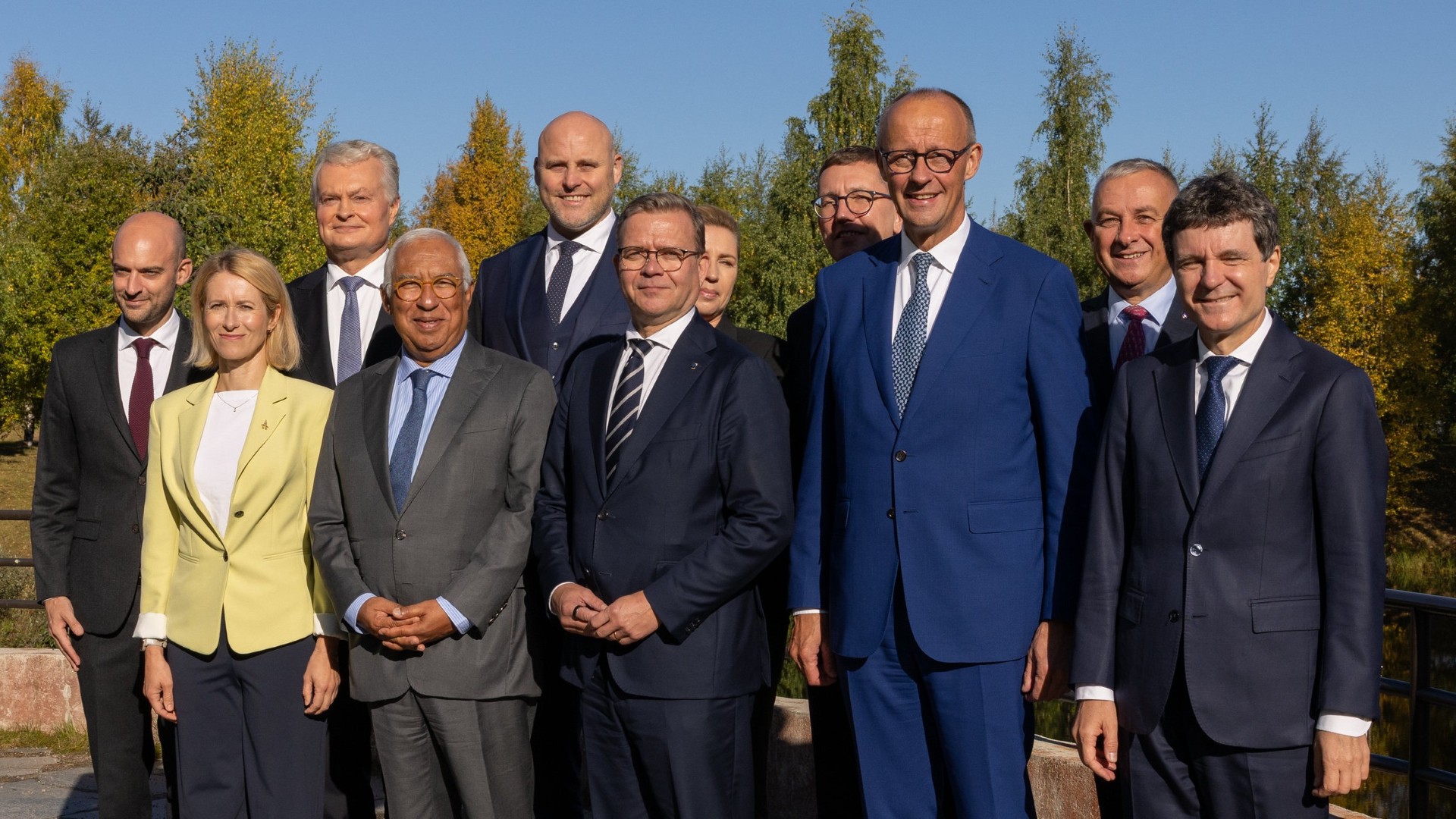
Prime Minister Petteri Orpo hosted German Chancellor Friedrich Merz, Danish Prime Minister Mette Frederiksen, Estonian Prime Minister Kristen Michal, Latvian Prime Minister Andris Kulbergs, Lithuanian President Gitanas Nausėda, Romanian President Nicușor Dan and French Foreign Minister Jean-Noël Barrot. European Council President António Costa, High Representative Kaja Kallas and International Partnerships Commissioner Jozef Síkela joined them. Greece, the Netherlands, Poland and Sweden signed the statement without sending a leader. On Sunday evening the group dined with Finnish President Alexander Stubb, Norway's Jonas Gahr Støre and Iceland's Kristrún Frostadóttir, two non-EU Arctic neighbours whose cooperation any European Arctic policy depends on. The participants also visited the Lapland Air Wing.
This is the third time Orpo has pulled EU leaders north for a security-themed gathering: the North South Summit in Saariselkä in December 2024 and the Eastern Flank Summit in Helsinki in December 2025 came first. The format is deliberate. Finland wants the Arctic treated as a European security space in the same breath as the Baltic, and it wants that view written into the Commission's forthcoming strategy before the text is drafted, not after.
The concrete ask was ships. Orpo told the summit that icebreaking capability is a strategic resource and that Europe should look at joint ownership of icebreakers, offering to share Finnish expertise with the rest of the Union. Merz backed him publicly, saying icebreakers are a European requirement rather than a Nordic one and that Finland has Germany's support to take the idea forward jointly. Kallas confirmed broad support at the table but added a caveat that matters for Finnish shipyards hoping to build the vessels: EU procurement rules would still apply, and contracts would go to the strongest bid.
The statement's wider shopping list runs to satellite-launch capability, critical infrastructure and military mobility, cross-border transport links, and the extraction and processing of critical minerals. Orpo argued the EU will have to direct more funding towards northern projects, and Costa pointed to plans for higher EU investment in Greenland under the next long-term budget. The leaders also noted the region's particular characteristics, the status of Indigenous peoples and the need for long-term sustainable development, with the area to be developed together with local residents.
Frederiksen used the summit to update colleagues on Greenland, where talks with the United States continue through a high-level working group. She said it was too early to draw conclusions but that she was quite optimistic a peaceful solution would be found. Costa repeated the EU's full support for Denmark.
The Russian dimension was not abstract. The summit opened a day after a Russian drone struck a Kyiv–Warsaw train inside Ukraine close to the Polish border, shortly after a delegation including Boris Johnson and Carl Bildt had crossed on the same line. Kallas described the strike as clearly intended as a message to Western countries. Orpo warned that Russia is becoming more aggressive and moving its attacks closer to European borders. Merz used the same platform to say he would not retreat from Germany's support for Kyiv despite political pressure at home, days after the AfD's win in Saxony-Anhalt.
The European Commission is expected to present a proposal for a new EU Arctic Strategy and an action plan for its implementation this autumn. The current strategy dates from 2021 and leans on climate, critical raw materials and infrastructure. The Rovaniemi statement is an attempt by the northern and eastern member states to push defence, transport and economic security to the front of that text, at a moment when Russia, China and the United States are all moving on the region as melting ice opens shipping routes and reveals resources.
Rovaniemi did not produce a decision, and it was not meant to. It produced a coalition and a shopping list, timed to land on the Commission's desk while the new Arctic strategy is still being written. The icebreaker proposal is the test case. If Brussels finds a way to fund and jointly own vessels that only a handful of member states will ever use, it will have crossed a line the EU has mostly avoided: treating a regional security asset as a common European one. Kallas's reminder about procurement rules is the first sign of how hard that will be. For Finland, the win is already partly banked. The Arctic now sits in the same sentence as the Baltic and the eastern flank in European leaders' vocabulary, and the strategy the Commission publishes this autumn will be judged against the statement the leaders signed in Lapland.