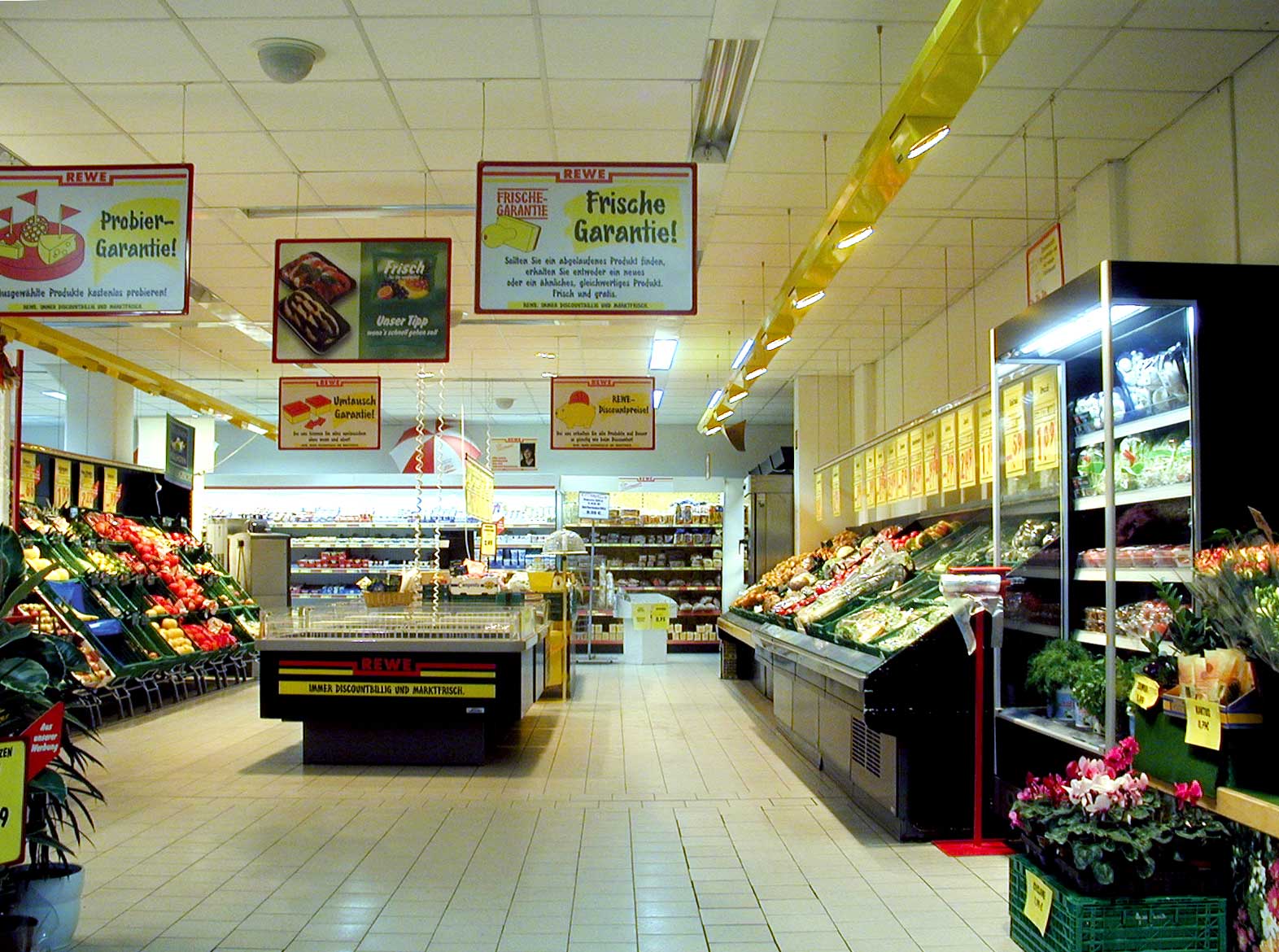
Buy the same branded shower gel in Prague and in Vienna and you may pay very different prices. Not because of transport, tax or wages, but because the manufacturer will not let a Czech wholesaler sell to an Austrian retailer, or the other way round. The practice has a bureaucratic name — territorial supply constraints — and it is the single cleanest illustration of a claim at the centre of EPIC's work on the European economy: that legal integration is not market integration.
EPIC's July 2026 report, The Cost of Single Market Fragmentation: What We Know, What We Don't, and What We Need to Measure, argues that Europe has carefully measured what the single market delivers and what dismantling it would cost, but has never measured what completing it would gain. Territorial supply constraints are one of five workstreams the report proposes for closing that gap. Looked at closely, they show why the gap exists.
The European Commission does have a figure. A study delivered for the Commission in 2020 estimated that eliminating territorial supply constraints in the EU retail sector could produce consumer savings of around €14bn, and documented cases where identical products sold for more than double in one member state what they cost next door.
That number is now six years old. It has not been updated, and nothing in the Commission's subsequent work replaces it. When the Single Market Strategy was adopted on 21 May 2025, it named territorial supply constraints in retail and wholesale as one of the "Terrible Ten" — the ten most damaging barriers still standing — and committed the Commission to building tools for the cases that fall outside competition law. On 5 March 2026, DG GROW published a call for evidence on a planned action, open to businesses, consumers, public authorities and academics for four weeks.
So the sequence runs: measure once, in 2020; name it as a top-ten problem, in 2025; consult on what to do, in 2026. What is missing at every step is a refreshed estimate of the prize.
Set €14bn against the other figures in EPIC's report and the problem becomes obvious. Mion and Ponattu estimated in 2019 that the single market already generates roughly €840 per EU citizen per year, about €427bn across the member states. In 't Veld put EU GDP 8 to 9 per cent lower in the counterfactual where the single market does not exist. Against those, €14bn looks like a rounding error — a consumer-protection footnote rather than a competitiveness question.
But nobody knows whether that is true, because the 2020 study measured a specific slice of retail, not the full economic effect of partitioned distribution across the single market. The estimate could be conservative by a wide margin. It could be roughly right. The point EPIC keeps making is that Europe is deciding how hard to push on this barrier without knowing which.
The pattern repeats elsewhere. Public procurement has been legally integrated for decades, and Herz and Varela-Irimia found in 2020 that local firms remain over 900 times more likely to win contracts than foreign bidders. Cross-border services were opened by directive and the European Parliament's research service still put the untapped gain at €297bn a year in 2019. In each case, the law says the market is one market and the commercial reality says it is twenty-seven.
There is a serious answer on the other side, and it deserves stating. Manufacturers have legitimate reasons to organise distribution nationally: packaging and labelling rules, language requirements, deposit-return schemes, national product regulation, different VAT regimes and genuinely different logistics costs. The Commission's own wording is careful — it targets constraints imposed "without objective justification", and the word "unjustified" is carrying real weight. Some share of the €14bn is not recoverable, because some share of the price gap is real cost.
The historical precedent also cuts both ways. EPIC's proposal is for a new Cecchini-style report, after the 1988 study that priced the cost of "non-Europe" at around 200bn ECU, roughly 5 per cent of Community GDP, and gave the 1992 programme its political force. But Cecchini worked because a political programme was already in motion and needed a number. A number produced into a vacuum does not create the programme. That is a limit on the measurement strategy, not an argument against it.
Territorial supply constraints are a small barrier by the standards of the single market's big files — nothing like energy market integration or capital markets union in economic weight. That is exactly what makes them diagnostic. This is a barrier the EU has identified, named in a formal strategy, listed among its ten worst, and consulted on — and it still cannot say with a straight face what removing it would be worth, because the only estimate on the books predates the pandemic.
EPIC's political-economy line explains the persistence better than any technical account: the benefits of integration are diffuse, cross-border and long-term, while the benefits of national protection are local, immediate and politically organised. A manufacturer defending its national distribution margin knows exactly what it is defending. The Czech shopper paying double does not know there is anything to defend. Until somebody measures the second side of that ledger, the first side will keep winning — one small, justified-sounding exception at a time.