Mario Draghi opened his competitiveness report to the European Parliament on 17 September 2024 with a warning about drift rather than collapse. "Over time, we will inexorably become less prosperous, less equal, less secure and, as a result, less free to choose our destiny," he said. Two years on, the most concrete European example of that drift is not a missing regulation. It is a queue of trucks.
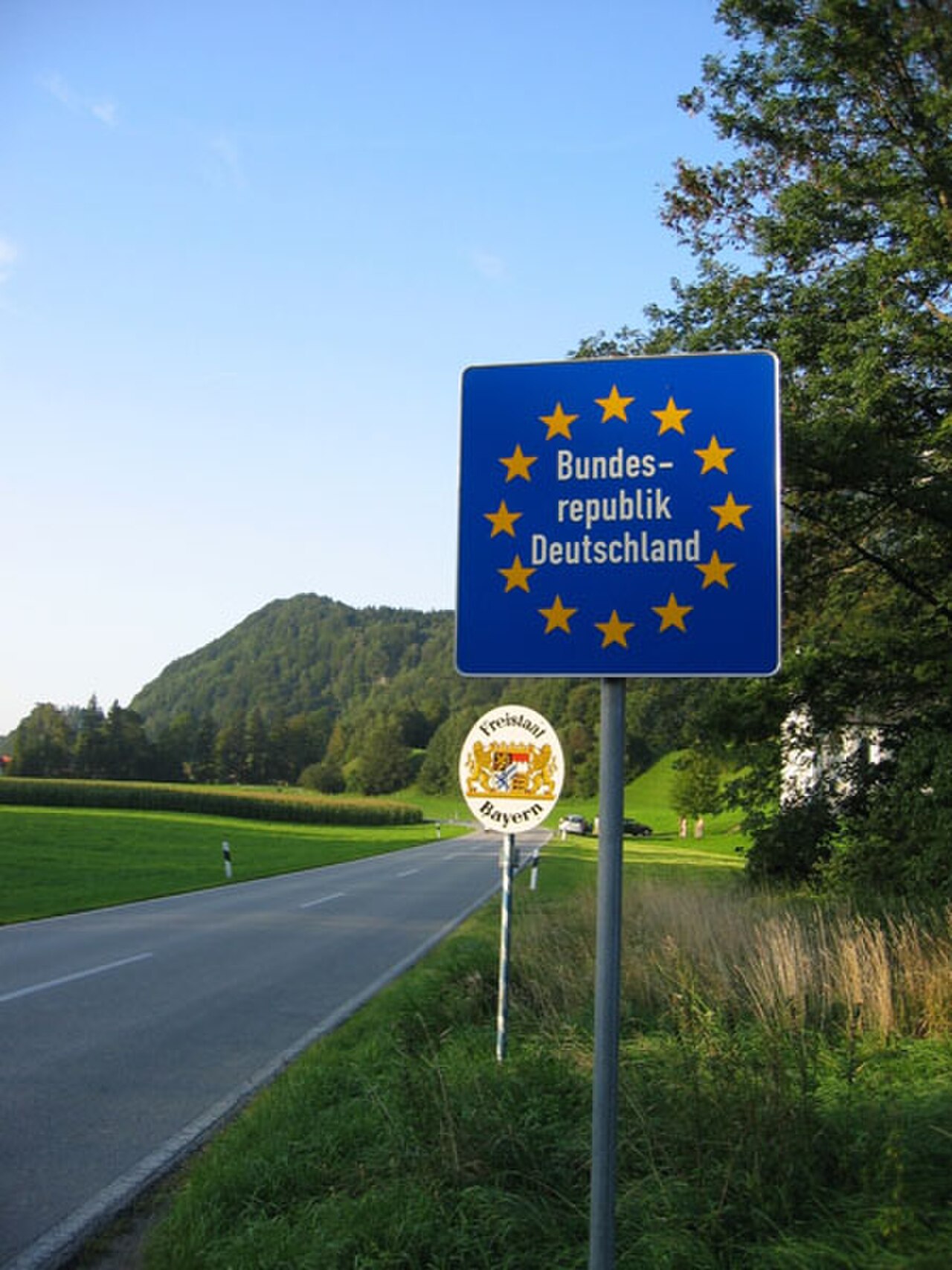
Eight Schengen countries — Austria, France, Germany, Italy, the Netherlands, Norway, Poland and Sweden — have notified the European Commission of internal border controls running through the autumn and into December 2026. Italy's latest notification took effect on 1 August, prompted by the mass crossing at Ceuta, and covers internal air and sea borders with Spain. Spain reciprocated. The two governments are checking each other's arrivals until September.
EPIC's July 2026 report, The Cost of Single Market Fragmentation: What We Know, What We Don't, and What We Need to Measure, is built around an absence. Its central argument is that Europe has measured what the single market delivers and what dismantling it would cost, but has never measured what completing it would gain — and that the missing number is why completion never becomes politically urgent.
The figures Europe does have are worth stating plainly, because they are the ones now being tested. Mion and Ponattu estimated in 2019 that the single market generates welfare gains of roughly €840 per EU citizen each year, around €427 billion annually across member states. In 't Veld put the counterfactual at 8–9% of GDP: that is how much smaller the EU economy would be without it. Those two numbers describe the same thing from opposite ends — what integration produces, and what its absence subtracts.
Set against them, the estimates for completing the single market are a mess of different baselines. The European Parliamentary Research Service has put broad completion gains at €651 billion to €1.1 trillion a year (2014), then €615 billion (2017), then services alone at €297 billion (2019). EPIC's judgement is that a plausible central range sits at 4–5% of EU GDP, but calls this an inference rather than a measurement — which is precisely its point.
The report's sharpest single finding concerns public procurement, a field legally integrated for decades. Herz and Varela-Irimia found in 2020 that local firms remain over 900 times more likely to win a public contract than foreign bidders. The law says the market is open. The awards say it is not.
That gap between the rulebook and the outcome is the same gap now visible at the border. The Schengen Borders Code permits temporary internal controls in exceptional circumstances. Eight governments have found the circumstances exceptional for years at a stretch. Nothing illegal is happening. The market is simply less single than the treaty implies.
Brussels is not ignoring the problem — it is working on a different part of it. The Commission adopted its 2026 Annual Single Market and Competitiveness Report on 30 January, the sixth in the series, naming a "Terrible Ten" list of the most damaging barriers and launching the first Annual Single Market Enforcement Agenda. The list is real and the barriers are genuine: national services regulation, professional qualifications, standards, packaging rules, territorial supply constraints. Ten omnibus simplification packages are meant to cut annual administrative burdens by €15 billion.
Not one of those instruments touches a police officer stopping a van on the A12. The single market's regulatory perimeter and its physical perimeter are being managed by different parts of the Union, on different logics, and only one of them is being measured.
There is a precedent for what a number can do. The 1988 Cecchini Report put the cost of "non-Europe" at around ECU 200 billion, roughly 5% of Community GDP. That figure gave the 1992 single market programme its political force — not because it was precise, but because it converted an abstraction into something a finance minister had to answer for.
Nothing comparable exists for the current round of re-fragmentation. The Commission's 2016 "Back to Schengen" communication estimated that fully reinstating internal border controls would generate immediate direct costs of €5 billion to €18 billion a year. That was ten years and one migration cycle ago, and it described a hypothetical. What is happening now is partial, rolling and open-ended, and no one has priced it.
EPIC's proposed remedy is institutional: convene a research steering group to produce a modern Cecchini-style report on the benefits of completing the single market, with defined workstreams on services and regulated professions, goods and regulatory heterogeneity, public procurement, territorial supply constraints and administrative burden. The report's political-economy line explains why this keeps not happening: "the benefits of integration are diffuse, cross-border and long-term; the benefits of national protection are local, immediate and politically organised."
The single market is Europe's most successful and least defended asset. The 8–9% of GDP that in 't Veld attributes to it is not a projection about the future — it is a description of output that already exists and that governments are, in small and defensible increments, spending down. Every extension of internal border checks is individually justifiable. Cumulatively they are an untracked withdrawal from the one part of the European project that reliably generates money.
EPIC's argument is that Europe cannot complete the single market because it has never calculated what completion is worth. The border checks suggest a harder version of the same problem: Europe cannot defend the single market either, because it has never calculated what each incremental retreat costs. A number would not settle the migration politics driving those checks. But it would put something on the other side of the ledger, and right now there is nothing there at all.