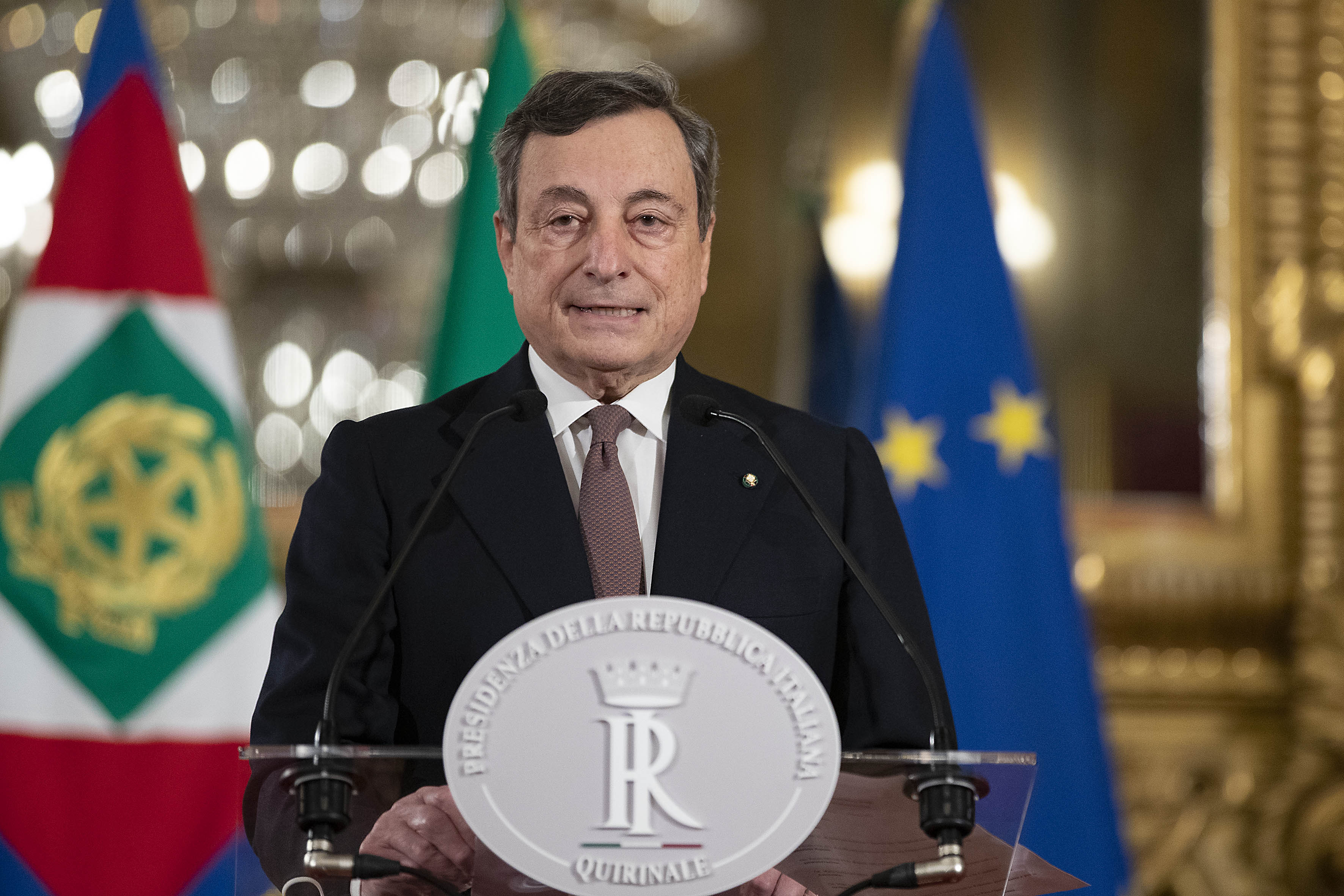
"Over time, we will inexorably become less prosperous, less equal, less secure and, as a result, less free to choose our destiny." Mario Draghi said that to the European Parliament in Strasbourg on 17 September 2024, presenting the report on the future of European competitiveness that carries his name. Thursday marks two years to the day. The EU's answer, measured by the laws it has passed since, is long on volume and short on structure. EPIC's Draghi Implementation Index (draghiwatch.eu), which tracks how many of the report's 383 recommendations have become binding EU law, assessed 38 acts adopted under the ordinary legislative procedure between September 2025 and January 2026 in its January 2026 interim audit. Around 60 per cent were of medium or high relevance to the Draghi agenda. Only six were judged structurally significant.
The six-out-of-38 finding is the least quoted number in the index and arguably the most important. A legislature can pass a great deal of relevant law without touching the structures Draghi wrote about: fragmented capital markets, energy prices two to three times those in the United States, procurement that rewards national champions, a single market that stops at borders for services. EPIC's audit separates relevance from significance for that reason. In the January 2026 reading, 29 measures had advanced in some form, strict implementation stood at 15.1 per cent, or 58 recommendations, and strict-plus-partial at 38.9 per cent, or 149, with 91 recommendations counted as partial. Those are respectable numbers for a legislative cycle. They are not the numbers of a structural turn.
EPIC's preliminary July 2026 update, the latest published reading, assessed a further 34 acts adopted between February and June 2026. Strict implementation edged up to 15.7 per cent, or 60 of 383, a gain of 0.6 percentage points in five months. Strict-plus-partial reached 41.3 per cent, or 158 recommendations, up 2.4 points. The comparison with the first half-year is stark: September to January added 7.5 points to the combined measure, February to June added 2.4. The movers EPIC lists for the spring are telling. The €90 billion defence loan for Ukraine (Regulation 2026/467) went to Implemented, as did the simplification of sustainability reporting (Directive 2026/470). The Russian gas phase-out, the EU Talent Pool, rail capacity rules, flexibility in the Water Framework Directive and the Global Gateway and EFSD+ instruments all advanced. Several of these matter. Few of them are the kind of measure Draghi meant when he said Europe faces a choice between paralysis, exit and integration.
The July update also produced the first ranking of Commission directorates-general by delivery: DG TRADE at the top with 41.7 per cent strict implementation, DG ENER at 2.7 per cent, DG EMPL at zero. EPIC reads the spread as a pattern rather than an accident. The EU moves fastest where competitiveness fuses with security, as in defence, where the sector score jumped from 35.7 per cent to 78.6 per cent between the September 2025 baseline and January 2026, and in support for Ukraine. It moves slowest on the structural reforms that force market outcomes: the single market, capital markets, energy. That is the same distinction the six-of-38 count captures at the level of individual acts. The index's headline proposal for closing the gap is a European Competitiveness Act, a single delivery package on the model of Fit for 55, rather than the 70-odd separate initiatives the Commission has been pursuing.
Two years is long enough to judge direction. In September 2024 Draghi said the additional investment Europe needs runs to €750 billion to €800 billion a year, more than double the Marshall Plan in relative terms. The legislative record since then, on EPIC's count, is 60 recommendations strictly implemented out of 383 and six structurally significant acts in the index's first four months. EPIC's next full review, the one-year report on the index itself, is scheduled for September 2026 and has not yet been published; nothing in this piece anticipates it. What can be said on the evidence to date is that the law-making machine has been running, and that the audit which asks what the laws actually change keeps returning a smaller number.
The Commission will use this week's State of the Union to list what it has delivered, and the list will be long. EPIC's audit is a reminder that length is the wrong metric. Six structurally significant acts in the first four months of tracking, and a delivery rate that slowed by two thirds in the following five, describe a Union that legislates readily where the politics are easy and stalls where Draghi said the gains are largest. The anniversary matters because the second year is the one where excuses run out: the mandate is settled, the Parliament is in place, and the report has been on every desk in Brussels since before either. If the September 2026 review shows the same shape as July, the argument for a single Competitiveness Act, with one deadline and one scoreboard, will be difficult to answer with another list of initiatives.