

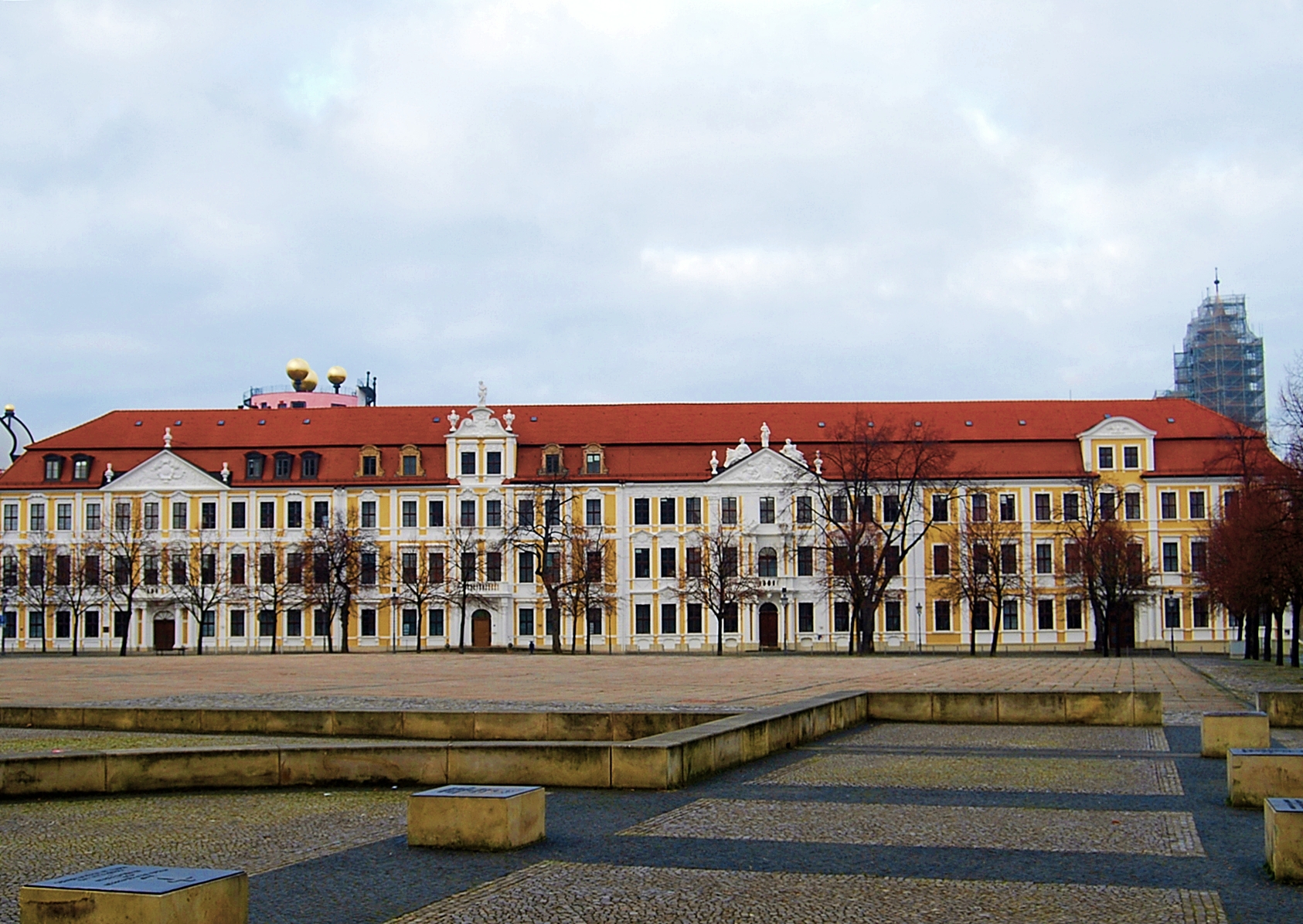
The Alternative for Germany won Sunday's election in Saxony-Anhalt with 43.8% of the vote and 39 of the 83 seats in the state parliament, on a turnout far above the last contest. It is the first time the far right has finished first in a German state election, and the first time it has been close enough to power to be asked how it would govern.
Close, but not there. Forty-two seats are needed for a majority in Magdeburg. The AfD has 39.
The arithmetic is the whole story. The hard-left, anti-immigration BSW scraped over the electoral threshold with 5.3% and five seats, taking votes the AfD might otherwise have collected. The CDU, which currently leads the state government under Minister-President Sven Schulze, fell to roughly 17% — less than half the winner's score in a state it has run for most of the post-reunification period.
That leaves one route to an AfD-led government that does not require another election: defection. Three CDU state lawmakers backing an AfD candidate for minister-president would be enough. Nobody in Magdeburg is naming names, and nobody is ruling it out either.
The Brandmauer — the CDU's refusal to cooperate with the AfD in any form — has been a statement of principle. On Sunday it became a counting exercise, and counting exercises are decided by individuals rather than by party conferences.
Merz spent the campaign restating the commitment while pointing to Saxony and Thuringia, where Michael Kretschmer and Mario Voigt govern with selective support from the Left party the CDU also formally refuses to work with. He drew the line at a joint programme or Left ministers in cabinet. Voters in Saxony-Anhalt do not appear to have found the distinction reassuring, and the AfD spent the campaign arguing that a party willing to make arrangements with one side of the spectrum has no principled reason to refuse the other.
The chancellor chaired an emergency meeting of his party in Berlin on Monday morning. He did not arrive to calls for his resignation. The mood at the CDU's election-night event in Magdeburg was gloomy, but nobody demanded his head — partly because the state branch had kept the unpopular chancellor at arm's length throughout the campaign, and partly because there is no agreed successor.
Hendrik Wüst, the minister-president of North Rhine-Westphalia, is the name being circulated. He is not moving. A challenger who strikes immediately after a regional defeat owns the next one, and the CDU's calendar is not getting easier.
The most damaging number for Merz is not the AfD's. It is his party's collapse among first-time voters, a cohort that does not usually return to a party it rejected at its first opportunity.
Saxony-Anhalt has 2.1 million people and forty years of history behind the Iron Curtain. Economic decline, resentment of Berlin and a measurable strand of pro-Russian sentiment made it the AfD's best terrain in the country. It is not a representative sample of Germany's sixteen states, and treating Sunday as a forecast for the elections coming in France, Poland and Italy is a stretch.
What it does establish is that the AfD can win outright, at scale, on a high turnout, in a normal election, against an incumbent centre-right government. That was still theoretical on Saturday.
Germany's political system has spent a decade managing the far right through a norm rather than a rule. Norms hold until the numbers make holding them expensive. In Magdeburg the cost of the firewall is now measurable: it is three CDU votes, and the price of a state government.
For Brussels, the significance is less about who runs Saxony-Anhalt than about who runs Berlin, and how confidently. A chancellor weakened at home negotiates differently on the EU budget, on Ukraine funding and on the trade file with China — all of which land this autumn. Merz survived Sunday night. He did not leave it stronger.




.png)


